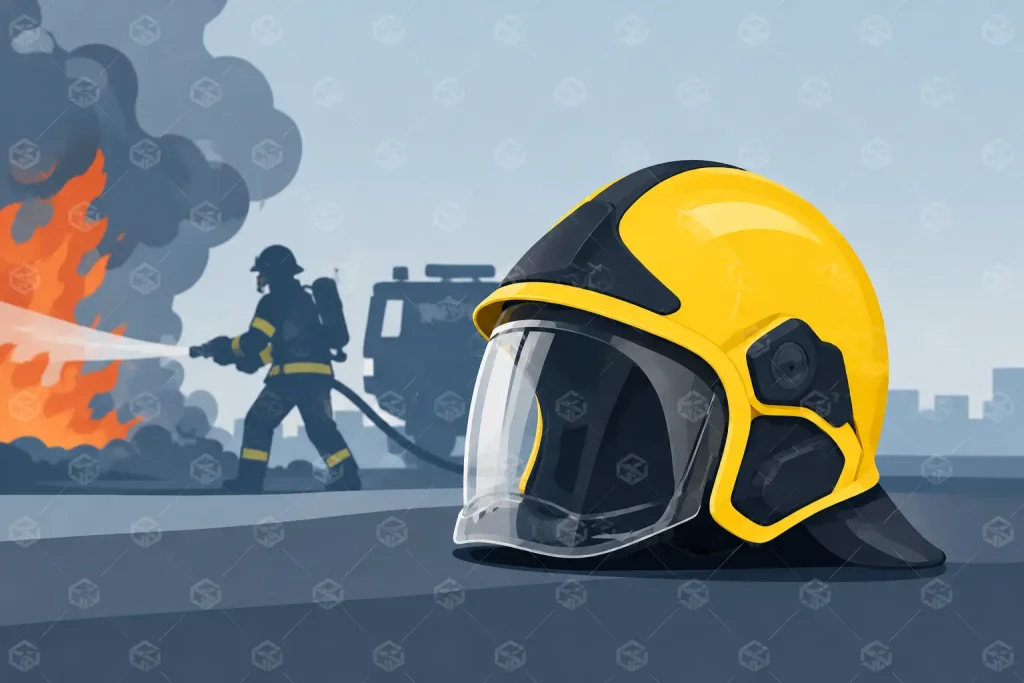
A fire helmet is not simply head protection. It is the platform that carries eye protection, hearing protection, communications and lighting while crews work under heat, time pressure and restricted visibility. Choosing fire helmets well means assessing the actual incident environment, the wearer’s full PPE system and the task that has to be completed without distraction.
For an operational buyer, the right answer is rarely a single helmet for every role. Structural firefighting, wildland deployment, technical rescue and station-based response each create different demands. The specification must protect the wearer without adding unnecessary weight, snag risk or incompatibility with the equipment they depend on.
Start with the operational risk, not the product catalogue
A helmet should be specified against the hazards a team is expected to face. For structural firefighting, the priority is resistance to heat, flame, impact, penetration and radiant exposure, alongside reliable coverage around the head and neck. The helmet must also remain stable when the wearer is moving through confined spaces, working at height or operating under a breathing apparatus mask.
Wildland firefighting presents a different balance. Crews often cover distance on foot, work for extended periods in changing weather and require greater ventilation and lower fatigue. Protection from flame, heat, falling debris and vegetation still matters, but a heavier structural design may not be the best operational choice for every terrain or climate.
Rescue work can sit between these environments. Urban search and rescue, rope rescue, flood response and vehicle incidents may require protection from impact and debris, secure retention, effective lighting options and compatibility with communication systems. A helmet designed only around fire exposure may be unnecessarily restrictive where mobility, peripheral awareness and all-day comfort are central to the task.
This is why procurement teams should define likely use cases before comparing features. Ask where the helmet will be worn, what other PPE it must work with, how long it will remain on the head, and what compromises are unacceptable. A well-written requirement prevents a technically certified but operationally unsuitable purchase.
Certification is the baseline, not the whole decision
Relevant standards provide a vital starting point. Structural fire helmets are commonly assessed to EN 443, while helmets intended for wildland firefighting or technical rescue may need to meet standards aligned with those specific applications. The exact requirement should be checked against service policy, risk assessment and the intended role of the wearer.
Certification confirms that a helmet has been tested against defined performance criteria. It does not automatically prove that it fits every wearer, integrates with every mask or headset, or will suit a particular operational doctrine. Those points need to be assessed separately.
Check that certification applies to the helmet configuration being issued. A visor, neck protector, torch mount, communications assembly or alternative retention system can affect the approved configuration. Documentation should be clear, current and retained with the equipment record. For organisations issuing equipment across multiple teams, that traceability supports inspection, replacement planning and consistent training.
Fit determines whether protection stays in place
The strongest shell cannot provide its intended protection if the helmet shifts during movement. A properly fitted helmet should sit level and stable, with the suspension adjusted to the wearer’s head shape and size. It should not rock when the wearer looks up, kneels, climbs or turns rapidly.
Retention is especially important. Chinstraps and nape adjustments must be easy to secure with gloves, resist accidental release and remain comfortable over a full shift. A strap that is overtightened to stop movement can create pressure points and discourage correct wear. Conversely, a loose helmet can compromise coverage and become a snag hazard.
Fit trials should include the full PPE combination, not a helmet tried in isolation at a desk. Wearers need to test it with their balaclava or hood, eye protection, respiratory equipment, hearing protection and communications kit. Where teams use different hair styles, head sizes or prescription eyewear, issue programmes should provide enough adjustment range and sizing options to accommodate the people doing the work. The objective is secure, repeatable fit for every wearer, not a nominal one-size solution.
Comfort is an operational control
Weight matters, but distribution matters as much. A helmet that feels acceptable for five minutes may create neck fatigue after several hours, particularly when fitted with a lamp, visor and communications equipment. Poor balance also affects movement and concentration during precise work.
Ventilation, sweat management and internal padding should be judged in the climate where the helmet will be used. Heat stress is a genuine operational concern, especially during prolonged wildland, rescue or summer deployments. However, greater ventilation may involve a different protection profile, so this is a decision to make against the approved role rather than a simple comfort upgrade.
Build the helmet around the wider PPE system
Fire helmets work as part of an ensemble. The shell profile, rear brim, face protection and neck coverage should be assessed alongside flame-resistant hoods, protective jackets and respiratory interfaces. Gaps, pressure points and conflicting components can only be identified when the system is worn together.
Face and eye protection require particular scrutiny. Clear visors support general visibility and shield against dust, splash and debris where appropriate. Tinted eye protection can assist in bright conditions, but it must not reduce visibility in smoke, poor light or changing weather. Some teams need both options, with a controlled method of stowing and deploying them without compromising the task.
Helmet-mounted lighting is equally valuable and easily overlooked. A torch mount should hold the light securely, avoid creating a snag point and keep the beam useful when the wearer is looking down, climbing or operating tools. If a lamp sits too far forward, it can affect balance. If it cannot be operated with gloves, it may be of limited value during a live incident.
Communications integration should be tested under realistic noise, wind and mask conditions. A helmet that accepts a headset in principle may still create discomfort, poor audio or interference with a visor and ear defenders. For air ambulance, search and rescue, coastguard and multi-agency teams, clear communications can be as critical to safety as the helmet’s physical protection.
Visibility supports team safety
A helmet’s colour and reflective detailing should support recognition in the environments where crews operate. High-visibility finishes can improve location awareness at roadside incidents, on open ground and around aircraft. More subdued finishes may be appropriate for tactical work or other specialist duties. There is no universal best colour – the choice should reflect the mission, local procedure and the need to identify command roles or functional teams.
Reflective components should remain effective after repeated cleaning and exposure. They should also be positioned so that they are visible from useful angles without interfering with labels, mounts or inspection markings. Marking a helmet with identification should follow the manufacturer’s guidance. Unapproved paints, adhesives, solvents and drilling can damage the shell or invalidate certification.
Inspection, cleaning and replacement are part of the specification
A fire helmet should be easy for users to inspect before and after deployment. Crews need to recognise cracks, deep abrasion, heat damage, distorted components, degraded reflective material, damaged visors and worn retention hardware. Any helmet that has sustained a significant impact or abnormal thermal exposure should be quarantined and assessed under the manufacturer’s instructions, even where damage is not immediately visible.
Cleaning must be controlled. Contamination from soot, fire residues, fuels and bodily fluids should not be allowed to remain on the equipment, yet aggressive cleaning chemicals or excessive heat can damage plastics, seals and internal components. A clear cleaning procedure, access to replacement parts and a record of inspection outcomes all extend safe service life.
Replacement planning is equally practical. Suspension systems, sweatbands, visors and straps may wear at different rates from the shell. Equipment programmes benefit from a defined process for repairs, alterations and like-for-like replacement, particularly where helmets are configured with service-specific accessories. This limits variation across the fleet and reduces the risk of a firefighter returning to duty in an unfamiliar setup.
Specify for the wearer who will use it
The best fire helmets are the ones crews will wear correctly, trust under pressure and operate without having to think about them. That outcome comes from matching certified protection to the role, validating fit across the team and proving compatibility with the full PPE system before issue.
For organisations managing mixed response capabilities, separate helmet specifications may be the safer and more efficient choice than forcing one design into every task. Rig Equipment’s approach to specialist operational equipment recognises that readiness is built through detail: the right protection, correctly fitted, maintained properly and ready when the call comes.