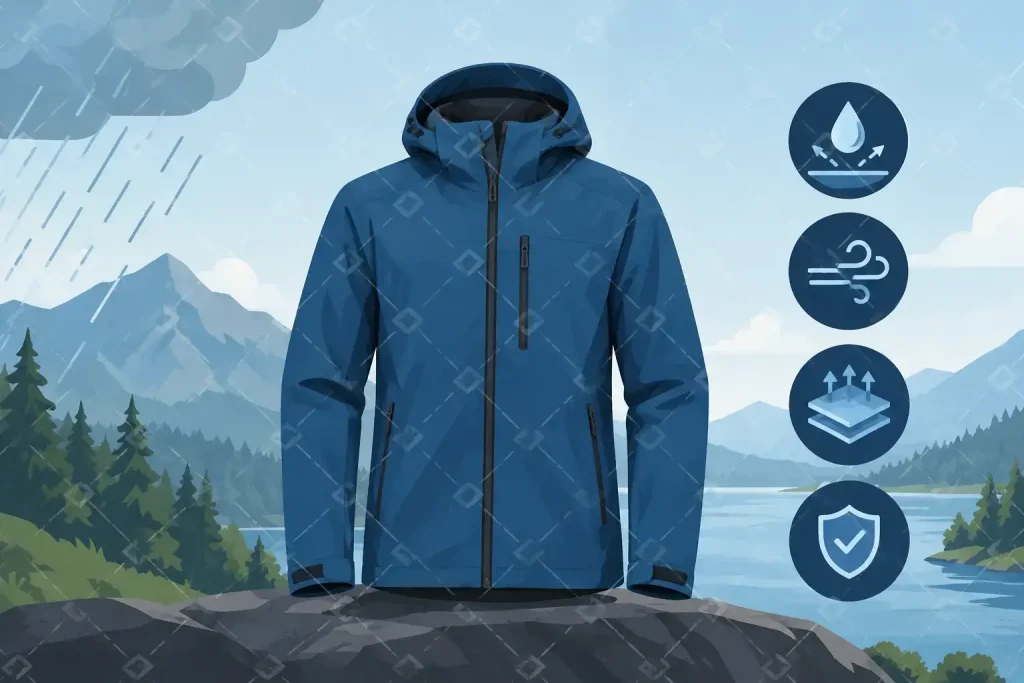
A waterproof operational jacket review should start where the weather becomes a safety issue, not where the product description ends. For a coastguard crew member on an exposed shoreline, a HEMS team moving between aircraft and scene, or a search and rescue operator working through sustained rain, the jacket must preserve warmth, movement, visibility and access to equipment. Staying dry is only one part of the job.
The correct choice depends on the mission profile. A lightweight shell that works well over insulating layers during an active hill search may be unsuitable for a casualty care team spending long periods static in wind and rain. Likewise, a hard-wearing outer garment for public order or maritime work must retain its performance after repeated cleaning, abrasion and day-to-day operational use.
Waterproof Operational Jacket Review: The Core Tests
A useful review does not treat waterproofing as a single claim. It examines how the fabric, membrane, seams, hood, closures and garment design work together under pressure. Water can enter through a poorly protected zip, a hood edge that does not move with the head, or seams that deteriorate after laundering, even when the face fabric initially sheds rain effectively.
Start with the stated waterproof construction. A waterproof-breathable laminate or coated fabric needs properly sealed seams throughout the garment, including areas around pockets, shoulder panels and sleeve joins. Check whether the main zip has a storm flap or a water-resistant construction appropriate to the intended conditions. In driving rain, exposed zip garages and pocket openings are more than minor design details.
Durable water repellency also matters, but it should not be confused with the waterproof barrier itself. When the outer face fabric wets out, the jacket may still stop water reaching the wearer, yet breathability can reduce and the garment can feel colder and heavier. Operational users should expect to maintain the outer finish in line with care instructions, particularly where garments are routinely exposed to salt spray, mud, fuel residues or frequent washing.
Breathability must match the workload
Waterproof protection without moisture management can leave the wearer damp from the inside. That is a comfort issue, but also a performance issue during long deployments and temperature changes. A jacket used for physically demanding search activity needs to release heat and moisture while carrying a rucksack, radio harness or flotation equipment. A garment for static tasks may favour greater weather protection and insulation compatibility instead.
Look beyond broad claims of breathability. Consider practical ventilation: pit zips, two-way front zips and pocket designs that can assist airflow when safe to use. These features are valuable only if they remain accessible around body armour, harnesses or medical kit. They must also close securely when conditions deteriorate.
The hood is part of the protective system
An operational hood should protect the face without restricting sightlines or hearing. It should adjust at the crown and around the face, remain stable in gusts, and turn with the wearer’s head rather than pulling across the eyes. For flight crews and helmeted teams, compatibility is critical. A hood that cannot be stowed securely or worn correctly around issued head protection may become an obstruction rather than an asset.
Collar height deserves the same scrutiny. A high collar can reduce wind chill and rain ingress, but it must not interfere with radio microphones, helmet straps, lifejacket components or a clear range of head movement. Test this in the actual kit configuration, not in isolation.
Fit, Layering and Freedom to Work
A waterproof operational jacket is an outer layer, so its fit must account for what sits underneath and above it. Base layers, fleece or insulation, body armour, flotation aids, harnesses and radios all change the way a garment behaves. A jacket that feels generous over a T-shirt may bind across the shoulders once the full system is worn.
Movement testing should be deliberate. Reach overhead as if operating a stretcher, crouch to access a medical bag, kneel, climb steps and turn sharply from the waist. Check whether the hem rides up, the cuffs expose the wrists, or the shoulders pull across the back. Sleeve articulation and carefully positioned seams can make a measurable difference during repetitive or restricted tasks.
Fit should not be treated as a standard male pattern scaled down or up. Female-fit apparel needs proportionate shaping through the shoulder, chest, waist and hip while retaining room for necessary layers and equipment. Accurate sizing guidance, professional measurement support and alterations where required reduce the likelihood of a garment being issued but not consistently worn.
The hem and cuff system should close effectively without creating bulk. Adjustable cuffs need to work with gloves, and the hem should not ride above a belt line when reaching or bending. Longer rear coverage can be useful in prolonged rain, but an excessively long cut may interfere with harnesses, vehicle seating or access to trouser pockets. The right balance is role-specific.
Details That Determine Operational Usefulness
Pocket placement is frequently overlooked until the jacket is worn with a harness or rucksack. Chest pockets may remain accessible when a waist belt is fastened, while lower pockets can be obstructed. For teams carrying maps, gloves, mobile devices, notebooks or medical consumables, pocket capacity is less important than secure, reachable storage.
A good operational design also considers communications and identification. Radio loops, microphone routing, attachment points and areas for embroidery or woven badges should not compromise the waterproof barrier or snag on equipment. If high-visibility panels or reflective detailing are needed, assess their placement in the wearer’s working posture and under worn equipment. Visibility on the chest is of limited value if it is concealed by a lifejacket or load carriage system.
Colour selection should follow the operating environment and organisational requirement. Darker colours may better suit tactical or aviation roles, while high-visibility options can support roadside, maritime or rescue activity. Neither is universally correct. What matters is whether the colour, reflective treatment and identification remain fit for the task after cleaning, abrasion and exposure.
Durability, Care and Whole-Life Readiness
A jacket is only dependable if it holds its shape and protective function through repeated deployments. Review reinforcements at high-wear areas such as shoulders, cuffs and pocket edges. Consider how the outer fabric will cope with stretcher handling, rough ground, vehicle interiors and contact with equipment. A heavier fabric may offer better abrasion resistance, but it can add bulk and reduce packability. Teams working from vehicles may accept that trade-off; teams covering distance on foot may not.
Care requirements need to be realistic for the organisation. Waterproof garments require correct washing, drying and reproofing to maintain performance. Contamination from bodily fluids, smoke, saltwater, oils or fuels may demand specific decontamination procedures. Before issue, confirm that the cleaning regime supports the garment’s materials and that replacement, repair and alteration arrangements are practical.
For procurement leads, sample wear trials are more informative than a desk comparison. Issue garments to a representative cross-section of users across different roles, body shapes and climate exposure. Ask them to test the jacket over standard PPE, in vehicles, on foot and during static work. Record where water entered, where movement was restricted and whether key equipment could still be accessed.
A clear specification should also define the expected weather exposure, layering system, colour and visibility needs, required pockets, identification method, compatibility with other issued PPE, sizing range and care process. This prevents a general-purpose jacket being asked to perform as specialist stormwear without the necessary design features.
A Review Should Finish With the Wearer
The strongest waterproof jacket is not necessarily the thickest, lightest or most feature-heavy option. It is the one that allows a trained professional to work safely, communicate clearly and remain protected for the duration of the task. For specialist teams, British-based design and bespoke development can be valuable when standard sizing, climate assumptions or equipment layouts do not reflect operational reality.
Rig Equipment approaches outerwear as part of a wider protective system, with the garment, the wearer and the mission considered together. When reviewing any waterproof operational jacket, wear it with the equipment it must support, test it in the conditions it must withstand, and judge it by whether it keeps the team ready to act when the weather turns.