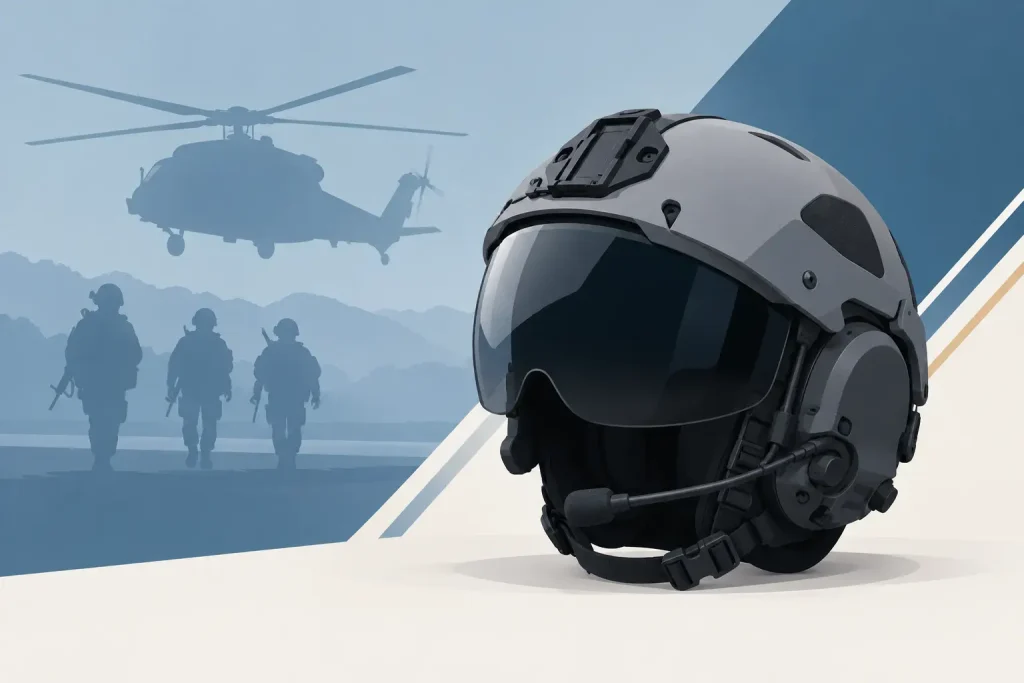
The NVolo G_Force helmet, is a lightweight carbon-fibre flight helmet designed for helicopter and fixed-wing crews, certified to EN966:2012+A1:2012. Supplied with dual visors, NVG-mount compatible visor cover, NVolo Helicom communication system, with a full size range and UK distributor support.
Features This helicopter and fixed wing crew’ helmet is certified to EN966:2012+A1:2012. The standard configuration features a dark smoke visor, along with a second transparent visor. The visor cover is designed to accommodate an NVG mounting plate. Additionally, the helmet integrates the NVolo Helicom communication system.
When supplied coupled with 3M Peltor TP-200-UK, the G-Force helmet provides certified hearing protection to EN352.
A G-Force helmet variant is also available with hearing protection to EN352 and Bluetooth adaptability. The top of the range G-Force helmet provides ANR system, Bluetooth and hearing protection to EN352.
Made from strong, lightweight carbon-fibre material Variety of colours available NVG Mount compatible Full size range available
Additional Information
Full UK based distributor support 2-year manufacturer warranty Full fitting and instructions service included Made in Italy No servicing contract required This garment is a special order and not available to buy online. Please contact us to discuss your requirements.
A flight helmet is not simply head protection with a visor attached. For HEMS, SAR, air ambulance and defence crews, it is a working interface between the wearer, aircraft, communications system and mission.
The right helmet can reduce distractions and adequately protect the wearer from a noisy, confined and fast-moving cabin. The wrong helmet can create pressure points, compromise radio clarity or become difficult to operate when wearing gloves. That distinction is not cosmetic. It affects crew comfort, fatigue management and operational readiness.
The NVolo G Force helmet does not come in generic sizes such as small medium large etc. Each helmet is fitted in a bespoke configuration to the intended end user. Each platform should be assessed as a configured system rather than as a shell alone. A helmet may be supplied with different visor arrangements, communication fittings, retention systems, liners and mounting options. Procurement teams should ensure that the specification being evaluated is the specification that will be issued, including all fitted components and the intended aircraft interface.