A firefighter working through heat and smoke, a coastguard crew member exposed to wind-driven spray, or a flight operative managing a casualty cannot stop to interpret a complicated device. Smart PPE technology must earn its place in that environment. It has to protect first, communicate clearly, and continue working when conditions are wet, dark, noisy, cold or physically demanding.
For emergency services and defence teams, the value is not in adding electronics to a garment or helmet for its own sake. The value lies in earlier warning, better operational awareness and evidence that helps leaders protect people before exposure becomes an incident. Used well, connected protective equipment can support safer decisions without distracting the wearer from the task in hand.
What smart PPE technology means in operational use
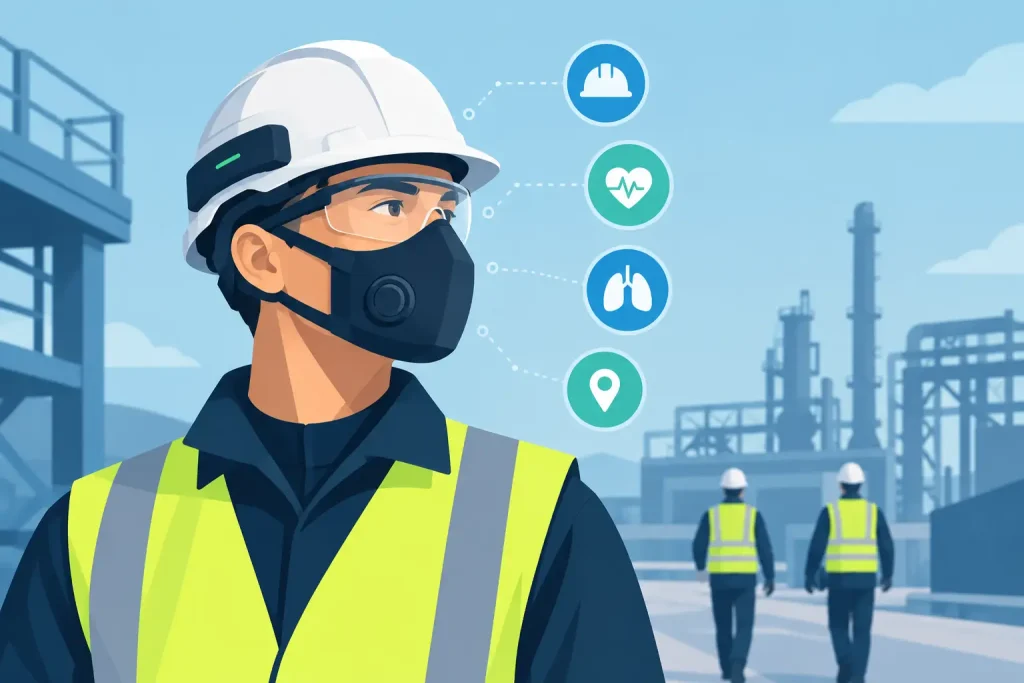
Smart PPE combines established protective equipment with sensors, communication hardware, location capability or data capture. It may sit within a helmet, garment, glove, boot, respiratory system or wearable device carried alongside PPE. The technology can monitor the wearer, the environment, the condition of the equipment, or a combination of all three.
A heat sensor, for example, may alert a wearer to rising thermal exposure. A fall-detection function may signal that a lone worker needs assistance. Location information can help incident command understand where teams are operating, particularly in poor visibility or on a large search area. Equipment identification systems can also record issue history, inspections and maintenance requirements.
These functions are useful only when they match a real operational requirement. A search and rescue team working across remote terrain may prioritise location confidence and emergency alerting. A fire and rescue service may focus on heat exposure, respiratory protection status and firefighter accountability. Flight crews may need compatible communications, low-light visibility and equipment that does not interfere with aircraft procedures.
Protection remains the first requirement
A common mistake is to assess a connected product as though the electronic feature is separate from the PPE. It is not. If a sensor housing creates a snag hazard, a battery affects balance, wiring reduces flexibility, or an attachment compromises flame resistance, the design has failed its primary purpose.
The protective performance of the base item must remain appropriate for the hazard. That includes flame and heat resistance where required, weather protection, impact resistance, visibility, dexterity and compatibility with other issued equipment. A jacket that collects useful data but restricts reach when operating a stretcher is not an operational improvement. Nor is a helmet-mounted unit that obstructs eye protection, hearing protection or a face seal.
Certification requires close attention. A compliant garment or helmet can be altered by the addition of third-party electronics, mounts or adhesives. Procurement teams should establish whether the completed configuration has been assessed for its intended use, rather than assuming the approval for the original item applies to every modification. This matters particularly where flame, arc, respiratory, ballistic, maritime or aviation risks are present.
Where connected PPE can make a practical difference
The strongest applications tend to address known gaps in awareness, accountability or maintenance. They should reduce workload, not create another stream of information for crews to manage.
Exposure and welfare monitoring
Heat strain, extreme cold, fatigue and environmental exposure can develop gradually. Sensors that monitor temperature, movement or physiological indicators may help identify a developing welfare concern earlier. However, readings must be interpreted carefully. Physical exertion, ambient temperature, clothing layers and individual variation all influence the result.
For this reason, smart monitoring should support trained supervisors and established welfare procedures, not replace them. A device can flag an exception. It cannot fully assess hydration, decision-making capacity, injury or the operational context around an individual.
Team location and emergency alerting
In complex incidents, knowing who is where can save critical time. Location and man-down functions can be particularly valuable for teams operating alone, entering confined areas, working offshore or moving through poor visibility.
The trade-off is reliability. Satellite positioning may be limited by buildings, dense woodland, terrain or indoor environments. Radio-based systems have their own coverage and infrastructure requirements. The right question is not whether a supplier offers tracking, but how the system performs in the places your crews actually work, including the areas where communications are already difficult.
Equipment management and readiness
Not every smart PPE application needs to operate during an incident. RFID or digital asset identification can strengthen issue control, inspection records, repair tracking and replacement planning. For organisations managing multiple stations, specialist teams or deployed assets, this can provide a clearer picture of what is in service and what requires attention.
This use case is often easier to implement because it does not add complexity to the wearer during a live task. It can also help preserve the value of quality protective equipment by making service history and repair decisions easier to manage.
Procurement questions that prevent expensive mistakes
Connected PPE should be introduced as an operational system, not purchased as an isolated product. The right specification begins with a defined risk or capability gap: missed welfare indicators, unreliable accountability, delayed equipment inspections or insufficient visibility of deployment status.
Before committing to a wider issue, teams should trial equipment with representative users in realistic conditions. That means wearing it with the full ensemble, using it in rain and low light where relevant, working through communications procedures, and testing it with gloves on. A short demonstration in a warm showroom will not reveal whether a control can be operated under stress or whether a charger is practical on a night shift.
The following checks are especially valuable when assessing smart PPE technology:
- Confirm that the complete system maintains the required protective certifications and does not interfere with other PPE.
- Test battery life against the longest credible shift, deployment or standby period, not the average day.
- Establish charging, spare battery, cleaning, inspection and repair arrangements before issue.
- Define who receives alerts, how they are escalated and what action is expected from supervisors.
- Review data ownership, retention, access controls and any workforce privacy implications.
- Check whether the system remains useful if network coverage, GPS or a central platform is unavailable.
Data governance deserves the same discipline as physical protection. Information about location, movement or physiological condition can be highly sensitive. Teams need a clear, proportionate policy that explains why data is collected, who can access it, how long it is retained and how it supports safety. If people believe a system is primarily being used for surveillance, adoption will suffer and valuable safety reporting may be lost.
Design, fit and maintainability still decide adoption
The best technology is often the least noticeable. Controls should be usable with gloved hands. Alerts need to be felt, heard or seen in a way that suits the operating environment. Displays must remain readable without compromising night vision or creating unnecessary light discipline issues. Weight distribution matters, especially on helmets and garments worn for long periods.
Fit remains non-negotiable. Protective clothing must accommodate a realistic range of body shapes and layering systems while allowing movement, reach and access to equipment. Bespoke development can be valuable where teams have unusual load carriage, communications layouts, flight restraints or role-specific requirements. A well-designed integration is safer than asking users to improvise attachment points in the field.
Maintenance must also be planned from day one. Electronics can introduce limits around washing, decontamination, drying, storage and repair. A clear service process is essential: who checks units, how faults are reported, whether modules can be replaced, and what happens when a garment requires alteration. Equipment that cannot be maintained quickly can leave a team with a costly gap in readiness.
Start with the problem, not the feature list
Smart PPE will not replace competent training, sound command procedures or properly specified protective equipment. It can, however, give crews and procurement leaders better information at the point where it has most value: before a missed check becomes an exposure, before a welfare concern becomes an emergency, or before an unserviceable item returns to use.
For organisations considering a connected issue, begin with one high-consequence problem and trial a system that works with the equipment, conditions and people already in place. The right solution should feel less like another device to manage and more like dependable support for the person doing the job.