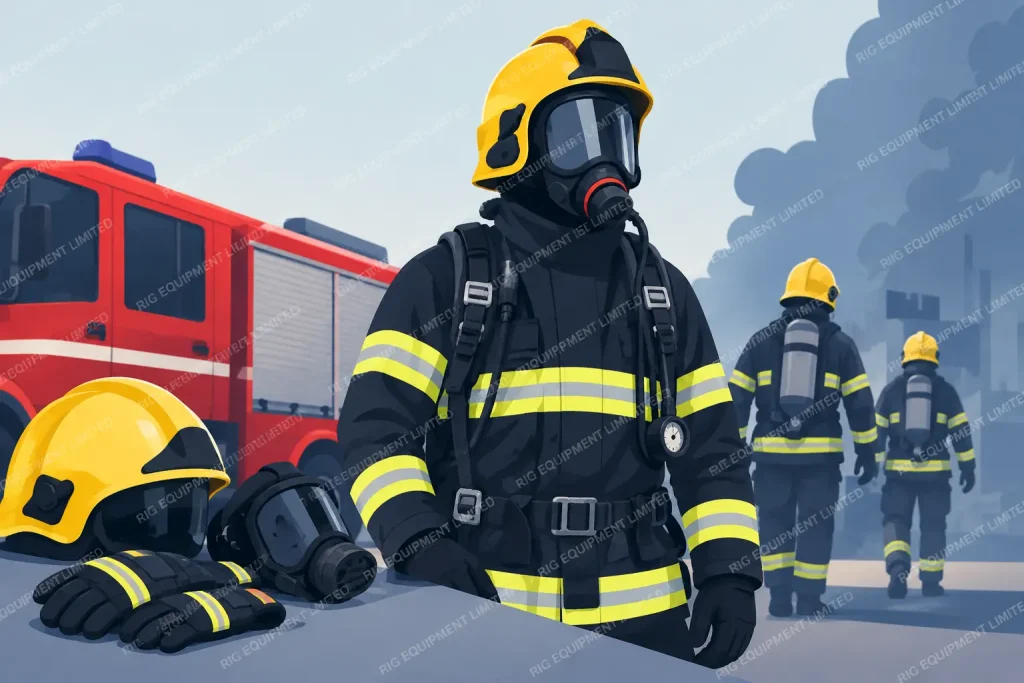
A fire kit that carries the right certification can still leave a wearer exposed if it is specified for the wrong incident profile, fitted poorly or maintained without control. Firefighter PPE standards provide the technical baseline for protection, but they do not replace a clear assessment of how, where and for how long a team operates.
For procurement leads and operational managers, the task is not simply to buy compliant garments. It is to build an ensemble that protects crews at the interfaces between helmet, hood, coat, gloves and boots, while preserving mobility, thermal comfort, visibility and reliable communication under pressure.
What firefighter PPE standards are designed to do
Standards define repeatable tests for specific risks. Depending on the item, these can include resistance to flame and radiant heat, tensile and tear strength, liquid penetration, impact, electrical hazards, slip resistance, dexterity and visibility. They give buyers a way to compare protective equipment against an agreed technical requirement rather than relying on appearance or broad performance claims.
A standard is not a guarantee that an item is suitable for every fireground or rescue task. It applies only to the scope and conditions covered by its test methods. A structural firefighting coat, for example, is built for a different hazard balance than clothing intended for vegetation fires, technical rescue, flood response or prolonged weather exposure.
This distinction matters. Greater thermal protection can add weight and reduce heat loss from the body. A lighter, more breathable solution may support endurance in a hot outdoor environment, but it may not provide suitable protection for interior structural firefighting. The operational risk assessment must lead the specification, not the other way round.
The core standards for structural firefighting PPE
For UK and international procurement, the following European and ISO standards are commonly central to a structural firefighter ensemble. The exact requirement should always be confirmed against service policy, the intended role and the manufacturer’s certification documentation.
Protective clothing: EN 469
EN 469 is the principal standard for protective clothing used in firefighting. It covers garments such as coats and trousers, assessing performance against heat and flame, including convective and radiant heat, alongside physical strength, water resistance and water vapour resistance.
The standard uses performance levels, and the highest level is not automatically the right choice for every wearer or task. A garment must be judged as part of a working system. Its cut, articulation, layering, moisture management and compatibility with other PPE all affect whether a firefighter can work effectively and safely.
Buyers should also check that certification applies to the finished garment in its supplied configuration. A compliant fabric alone does not make a compliant garment. Closures, reflective trim, reinforcements, seams and the construction of the moisture barrier all contribute to overall performance.
Helmets: EN 443
EN 443 covers helmets for firefighting in buildings and other structures. It addresses impact, penetration, heat and flame exposure, retention, field of vision and other critical helmet characteristics.
A helmet must work with eye and face protection, hearing protection, communications equipment, respiratory protective equipment and the chosen hood. Compatibility testing is particularly valuable where crews use issued radios, helmet-mounted lighting or respiratory protection. Equipment that conflicts at the point of use can compromise protection, concentration and speed.
Gloves: EN 659
EN 659 applies to protective gloves for firefighters. Fireground gloves need to balance resistance to heat, flame, water and mechanical hazards with grip and dexterity. That balance is operationally significant when a wearer must operate hose fittings, casualty equipment, radio controls or vehicle systems in wet, cold or low-light conditions.
Gloves should be trialled with the tasks crews actually perform. A bulky glove may perform well in a laboratory test yet make fine handling difficult. Conversely, a highly dexterous glove may not be suitable for the heat and abrasion exposure expected at a structural incident.
Boots: EN 15090
EN 15090 covers footwear for firefighters. It considers hazards including heat, flame, penetration, compression, slip and electrical properties. Correct boot selection also depends on the ground conditions crews face: wet station yards, debris-strewn buildings, mud, fuel-contaminated surfaces or extended walking over uneven terrain each place different demands on comfort and grip.
Fit cannot be treated as a secondary issue. Poorly fitted boots increase fatigue, create pressure points and can undermine secure footing. Sizing provision must account for foot shape, orthotic needs and the socks worn on duty.
Hoods: EN 13911
EN 13911 applies to protective hoods for firefighters. A hood protects vulnerable areas around the head, neck and shoulders, but its performance depends on how it mates with the helmet, facepiece and collar. Gaps can expose skin to heat, flame products and contaminants; excessive bulk can interfere with the face seal or restrict head movement.
Structural fire, wildland fire and rescue are not the same job
A single generic PPE issue rarely serves every environment well. Wildland firefighters may work for extended periods with high physical exertion, radiant heat, smoke and rapidly changing weather. Their clothing must manage heat burden and mobility while providing the right level of flame and heat protection. EN 15384 is a relevant standard for protective clothing for wildland firefighting, rather than a substitute for EN 469 structural firefighting clothing.
Search and rescue, coastguard and medical response teams may need flame-resistant layers alongside weatherproof outerwear, high visibility, water resistance, cold-weather protection and freedom of movement for lifting, climbing or casualty care. In these roles, certified performance must be matched to the credible hazard, not assumed because a product looks tactical or heavy-duty.
This is where modular systems are often more effective than a one-garment solution. Flame-resistant base layers, task-specific mid-layers and compatible outer garments allow a team to adjust protection for climate and workload without losing control of the specification.
Fit, interface protection and wearer acceptance
PPE that does not fit will not deliver its intended protection. Female firefighters and smaller-framed wearers should not have to compensate for unsuitable proportions with rolled sleeves, loose waist adjustments or compromised reach. Purpose-designed fit options support mobility, reduce snag risks and help maintain correct coverage during overhead work, crawling and lifting.
Assessment should include movement in realistic positions: reaching above shoulder height, climbing, kneeling, entering vehicles, operating equipment and working with respiratory protection. Check the overlap between coat and trouser, the collar and hood interface, glove-to-sleeve coverage and the interaction of boot, trouser hem and gaiter.
Wearer acceptance is also a safety issue. Crews are more likely to wear and maintain PPE correctly when it is comfortable, practical and suited to their role. Controlled wear trials provide better evidence than a short fitting-room assessment, particularly for high-exertion or all-weather duties.
Certification is only the start of lifecycle control
PPE compliance can degrade through contamination, heat exposure, damage, incorrect laundering and unauthorised alterations. A sound issue programme includes traceable inspection, cleaning instructions, repairs by competent providers and clear criteria for withdrawal from service.
Look for legible labels, batch and product identification, care information and certification records. Ensure replacements match the approved specification. A substituted hood, glove or garment may create a compatibility problem even when it carries an appropriate standard in isolation.
Alterations need particular care. Adding badges, embroidery, repairs, extra pockets or reflective components can affect garment integrity if carried out without the manufacturer’s approval. Bespoke development is valuable where it solves an operational need, but it should protect the certified design rather than undermine it.
Building a specification that crews can trust
Start with the incident types, climate, duration of wear and operational tasks your team faces. Then define the relevant standards, performance levels, interfaces and sizing requirements before evaluating garments. Request evidence for the finished product, not just its component materials, and involve wearers in structured trials.
Rig Equipment supports operational teams with certified materials, practical measurement guidance and bespoke development where standard issue does not meet the task. The aim is not more equipment for its own sake. It is a controlled, compatible PPE system that lets personnel focus on the incident rather than the limitations of what they are wearing.
The strongest specification is one your team can verify at issue, trust during deployment and maintain throughout its working life.