A helmet can look serviceable on the appliance rack yet have taken an impact that has compromised its protective structure. A waterproof jacket may still appear presentable while its seam tape, flame resistance or moisture barrier is no longer performing as issued. Knowing when to replace rescue equipment is therefore not a matter of keeping stores tidy. It is a readiness decision that affects protection, mobility and confidence when conditions turn severe.
For rescue, medical, fire, maritime and tactical teams, replacement decisions should be based on a controlled combination of inspection findings, manufacturer instructions, service history, exposure and operational risk. Calendar age matters, but it is rarely the only trigger.
When to replace rescue equipment
Replace equipment immediately when it can no longer provide the level of protection, retention or function for which it was selected. Obvious damage is the clearest example, but not every failure is visible. A disciplined inspection routine is the practical safeguard between issue and use.
The decision becomes urgent after a significant incident: a helmet dropped from height, eyewear struck by debris, gloves exposed to chemicals, boots subjected to prolonged contamination, or clothing involved in flame, fuel or bodily-fluid exposure. Remove the item from service first. Then follow the relevant decontamination, inspection and manufacturer guidance before deciding whether it can return to use.
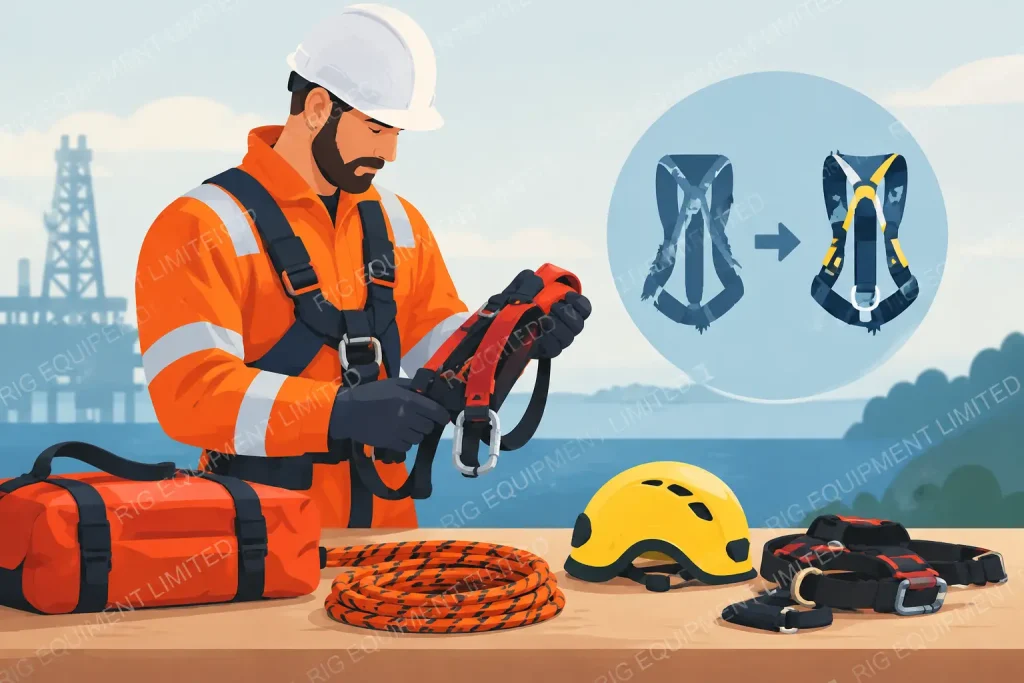
For life-safety or load-bearing equipment, do not rely on a visual check alone. Harnesses, ropes, connectors, flotation equipment and associated rescue systems must be managed under the inspection intervals, retirement criteria and competent-person requirements set by the manufacturer and your organisation. Where there is uncertainty about an item’s history or integrity, quarantine it rather than returning it to the operational pool.
Age is a prompt, not a complete answer
Every item has a usable service life, but that life changes with its design, materials, frequency of use and environment. Equipment stored clean, dry and away from ultraviolet light may age very differently from kit used daily on coastal taskings, aircraft operations, roadside incidents or wildland deployments.
Date labels, batch records and issue logs are useful because they tell you when to look closer. They are not permission to keep equipment in use beyond an explicit replacement date. Equally, an item that is technically within its stated service life may still need replacing after damage or heavy exposure.
Procurement teams should avoid setting a single blanket replacement cycle for all PPE. A base layer, a protective helmet, a technical glove and a headtorch do not fail in the same way or carry the same consequences. Build replacement schedules around the equipment category, anticipated exposure and the manufacturer’s documented instructions.
Look beyond cosmetic wear
Scuffs and surface marks are not automatically grounds for replacement. Operational equipment is expected to work hard. The question is whether wear has affected safety, performance, fit or hygiene.
Warning signs include cracking, deformation, delamination, loose stitching, torn webbing, damaged fastenings, loss of elasticity, worn grip surfaces, failed zips, degraded reflective markings and persistent leakage. For protective garments, inspect seams, cuffs, closures and high-wear areas such as knees, shoulders and seat panels. A small defect in a non-critical area may be repairable; damage to a protective layer or an essential closure may not be.
Fit is also a safety issue. Equipment that has become misshapen, shrunk, stretched or difficult to adjust can restrict movement and leave gaps in protection. This matters particularly where a team relies on layered systems, helmet retention, compatible gloves or specialist female-fit garments. If the wearer cannot achieve the intended fit consistently, the item is no longer dependable as issued.
Replace after contamination when safe recovery is not assured
Contamination is one of the most misunderstood reasons for retiring equipment. Some items can be professionally cleaned and returned to service. Others may retain hazardous residues, lose protective properties or be impossible to decontaminate fully without damage.
Fuel, oils, chemicals, smoke particulates, blood and other biological contaminants all require a controlled response. Do not allow contaminated equipment to travel casually between vehicles, lockers and homes. Segregate it, record the exposure and apply your organisation’s decontamination process alongside the manufacturer’s guidance.
If a garment, glove, boot or bag cannot be restored without compromising its material or construction, replacement is the correct decision. The apparent cost of retiring an item is minor beside the risk of exposing the next wearer to contaminants or sending them into an incident with reduced protection.
Functional failure should not wait for total failure
Rescue equipment often provides early warnings. A lamp that flickers, a zip that catches, a boot sole that has hardened, a helmet adjustment system that slips or eyewear that fogs beyond reasonable management may still be usable in a low-risk setting. That does not make it suitable for operational issue.
Test function during routine checks, not only when an item is needed. Lights should be checked with their batteries and charging systems. Footwear should be assessed for sole separation, tread wear, support and water ingress. Gloves need sufficient dexterity and grip for the tasks expected of the wearer. Clothing should allow unrestricted movement while maintaining coverage when reaching, kneeling, lifting and working in poor weather.
Where a fault can be repaired using approved parts and methods, repair can extend the useful life of an item and reduce unnecessary waste. Repairs must not alter certification, protective performance or compatibility. A repair that looks neat but has not been authorised for the equipment is not a safety control.
Build replacement into the inspection system
The best replacement programme is predictable without being inflexible. It gives individual users clear daily responsibilities, supervisors a regular inspection process, and procurement teams enough data to forecast demand before shortages become urgent.
A useful equipment record should capture the item type, unique identifier where applicable, issue date, user or location, inspection dates, findings, repair history, contamination events and retirement reason. This creates a clear audit trail and helps identify recurring issues. If one role wears through knee panels, glove palms or boot tread faster than expected, the answer may be a different specification, a revised issue quantity or a repair arrangement rather than simply ordering the same item again.
For organisations with multiple stations, bases or deployment environments, consistency matters. Agree inspection standards and quarantine procedures across the team. A damaged item should not be moved from one location to another simply because it is no longer acceptable at its original base.
Separate routine replacement from urgent replacement
Routine replacement covers expected wear. It allows teams to plan stock, measurements and seasonal changes without compromising availability. Urgent replacement covers damage, contamination, failed function or loss of compliance, and it needs a rapid route from report to reissue.
Keeping a modest reserve of core sizes and mission-critical items protects readiness. However, reserves should be stored correctly and inspected too. Equipment does not remain serviceable merely because it has stayed in a cupboard.
Choose the replacement specification carefully
Replacing like for like is sensible when the existing equipment has performed well and the operational requirement has not changed. But retirement is also a useful point to assess whether the original specification remains right for the task.
Consider changes in climate, operational tempo, vehicle configuration, layering systems and user feedback. Teams working in prolonged wet weather may need improved moisture management. Flight crews may require different mobility and pocket placement from ground responders. A revised cut, material weight or sizing approach can improve protection and comfort without introducing unnecessary complexity.
This is where measurement support and controlled trials add value. A technically capable item still fails the user if it rides up, restricts reach or prevents effective layering. Rig Equipment supports specialist teams with tailored development, alterations and repairs where these services are appropriate, helping organisations maintain a consistent operational standard rather than treating every replacement as an isolated purchase.
The aim is not to discard equipment at the first mark of use. It is to remove uncertainty before it reaches the incident ground. When an item no longer meets its protective purpose, fits correctly or performs reliably, replacement is not an administrative task. It is part of keeping every responder ready for the next call-out.