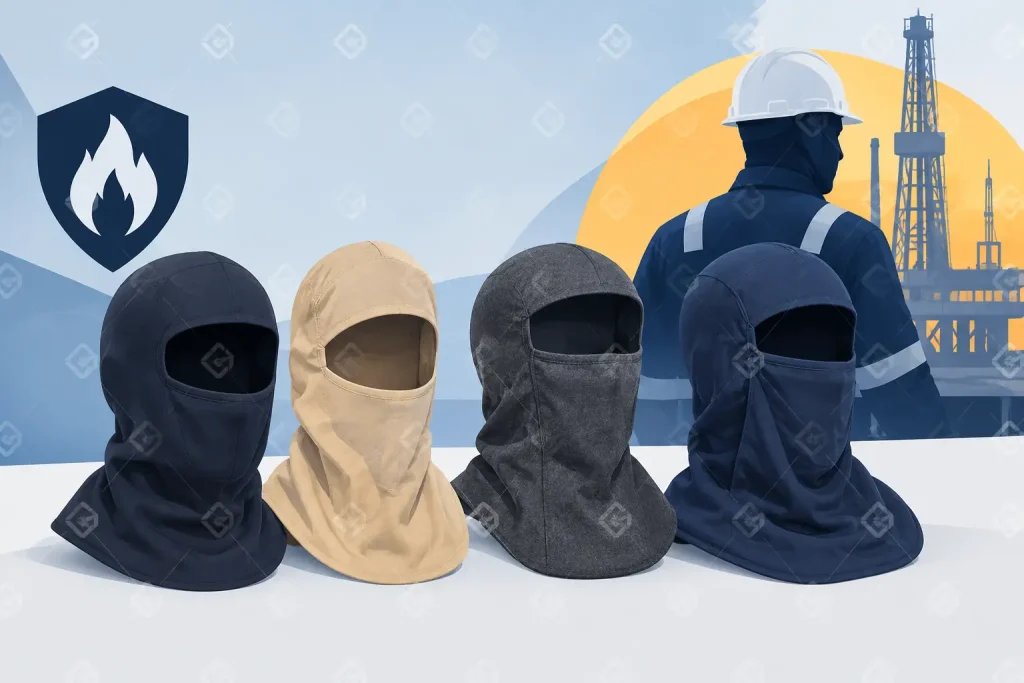
A flame event does not give a crew time to adjust exposed kit. The best flame resistant hoods provide dependable coverage at the vulnerable gap between helmet, collar, face protection and outer layers, while allowing personnel to hear, communicate, breathe and move without distraction. For fire and rescue, flight, SAR, coast guard and tactical teams, the right hood is a system component, not an afterthought.
There is no single hood that is best for every operational role. The correct specification depends on the heat hazard, potential for flash fire or arc exposure, helmet and respirator arrangement, weather conditions, shift length and the level of physical exertion expected. Procurement decisions should begin with the task, then work back to the garment construction and certification required.
What Makes the Best Flame Resistant Hoods?
A suitable flame resistant hood must do more than resist ignition. It needs to limit heat transfer, retain its protective properties throughout its service life and maintain coverage as the wearer turns their head, looks upward, kneels or works in a confined position. If the hood rides up at the neck or pulls away from the face opening, nominal protection on a specification sheet is of limited practical value.
Material choice is central. Inherent flame resistant fibres carry their flame resistance within the fibre itself, rather than relying on a topical treatment that may diminish through laundering or wear. This can make them a strong choice for issue garments subject to frequent washing and repeated deployment. Treated fabrics can also have a place, but their care regime, expected life and re-treatment requirements must be clearly understood before issue.
The construction must match the thermal threat. A lightweight single-layer hood may be appropriate where personnel need low bulk beneath a flight helmet or where heat stress and endurance are primary concerns. A heavier or multi-layer construction may offer greater thermal performance for higher-risk exposure, although it can increase insulation, bulk and moisture retention. More protection is not automatically better if it compromises communication, helmet stability or the ability to work safely for the duration of an incident.
Start With the Hazard, Not the Product Name
The term flame resistant covers a wide range of garments and materials. It should not be treated as proof that a hood is suitable for every fireground, aviation, industrial or public-order deployment. Define the credible hazard before comparing options.
For a structural fire environment, the hood must be considered alongside firefighting PPE, breathing apparatus, helmet design and the relevant organisational standard. In wildland and vegetation fire work, crews may need a lighter, highly breathable solution that manages radiant heat and intermittent flame contact without imposing unnecessary heat burden during long movement over difficult ground.
Flight and aviation personnel can face flash-fire risk, fuel-related hazards and confined cockpit environments. Here, low profile fit is often decisive. A hood that bunches at the neck, interferes with headset seals or disrupts helmet retention is unsuitable, even if its fabric performance is strong. For medical responders and air ambulance teams, the assessed hazard may be different again: an FR hood should be selected only where it aligns with the operational risk assessment and wider PPE policy.
Tactical teams may require discreet coverage that integrates with helmets, respirators, eye protection and communications equipment. The priority is often a stable face aperture, limited bulk and a fit that does not obstruct peripheral vision or compromise a protective mask seal.
Certification Must Be Relevant and Traceable
Standards matter because they create a common basis for testing and procurement. They do not remove the need to confirm that the finished hood is suitable for the intended deployment. Ask which standard applies to the garment, what that standard evaluates, and whether the tested configuration reflects the product being issued.
A clear technical data pack should identify the fabric composition, garment construction, size range, care instructions and relevant certification or test information. It should also distinguish between the performance of an individual material and the compliance status of the finished garment. Those are not always the same thing.
For organisational buyers, this information supports consistent issue, audit trails and replacement planning. It also helps prevent an increasingly common problem: combining individually protective items that leave gaps when worn together. The hood, collar, jacket, helmet, visor, breathing apparatus and communications equipment should be assessed as worn by the user, not as separate catalogue items.
Fit Is a Protection Requirement
A poor fit can create exposure points, discomfort and avoidable fatigue. It can also cause personnel to modify the garment during a job, which defeats the purpose of issuing protective equipment in the first place.
The face opening should sit close enough to provide coverage without pressing uncomfortably against the eyes, nose or mouth. It must work with eye protection and breathing apparatus where required, and should return to position after the wearer moves their head. The neck and shoulder area needs enough length and stretch to overlap with the outer garment collar during movement.
Female fit and a broad, well-considered size range deserve particular attention. Head and neck dimensions vary significantly across a team, and a one-size approach can leave some users with excess fabric beneath the helmet while others experience tightness at the jaw, neck or shoulders. Wear trials should include the full range of personnel who will use the item, not only a small group of representative wearers.
Comfort is operational performance. A hood that is excessively hot, itchy, restrictive or difficult to put on correctly is more likely to be worn improperly or avoided where discretion is possible. Look for smooth seams, low-bulk construction and fabrics that manage moisture appropriately for the work rate and climate.
Check Compatibility Before You Issue
The most capable hood can fail operationally if it is incompatible with the equipment around it. A practical wear trial should replicate the tasks personnel actually undertake: donning helmets and eye protection, fitting respiratory equipment, operating a radio, climbing, driving, casualty handling and working in adverse weather.
Pay particular attention to helmet interfaces. Excess material at the crown can affect helmet position, while a high or thick neckline can disrupt the collar closure of an outer garment. With respirators or masks, check that the hood does not interfere with seals, straps, valves or microphone placement. For flight crews, test the complete arrangement with headsets and helmet-mounted systems rather than relying on a static fitting.
Communication is equally critical. Thick or tightly tensioned fabric around the ears can reduce hearing and make radio use more difficult. That trade-off may be acceptable in a specific high-heat role, but it should be recognised and managed through the equipment system, not discovered during an incident.
Durability and Care Should Shape the Specification
Operational hoods are repeatedly stretched, contaminated, laundered, packed and worn beneath other equipment. Their protective properties and fit need to remain reliable through that cycle. A lower initial purchase cost is quickly undermined if the garment loses shape, develops seam failures or requires replacement after limited use.
Care instructions should be realistic for the organisation’s laundering arrangements. Some contaminants, including oils, fuels and residues from fire environments, require controlled decontamination rather than routine washing. Personnel should know when a hood can be cleaned, when it must be removed from service and who has authority to inspect or replace it.
A sound inspection routine checks for four common issues:
- holes, thinning fabric, abrasion or damaged seams;
- loss of stretch or distortion around the face and neck opening;
- persistent contamination, odour or staining that cannot be safely removed; and
- missing product identification or unclear care and traceability information.
Replacement planning should account for spares, individual issue records and the ability to obtain matching items promptly. For specialist teams, access to alterations, professional measuring and bespoke development can be as valuable as the garment itself, particularly where standard sizing does not provide a dependable fit.
Specify for the Conditions Your Team Actually Faces
Climate affects the choice as much as flame exposure. A hood intended for cold, wet coastal operations may need to work beneath stormwear and helmets for long periods, whereas a hot-weather or wildland configuration may prioritise low mass and breathability. In either case, crews should not be forced to choose between thermal comfort and correct coverage.
British-based design and manufacture can be particularly useful where teams need controlled specifications, repeatable sizing or adjustments based on field feedback. Rig Equipment works with operational users who need clothing designed around the realities of hazardous, weather-exposed work, including climate-specific materials and fit requirements that generic workwear often misses.
The best choice is the hood that protects the actual wearer, integrates with their issued equipment and remains dependable after repeated use and care. Put it through a realistic wear trial before committing to issue, because the time to find a coverage gap is in training, not at the edge of an incident.