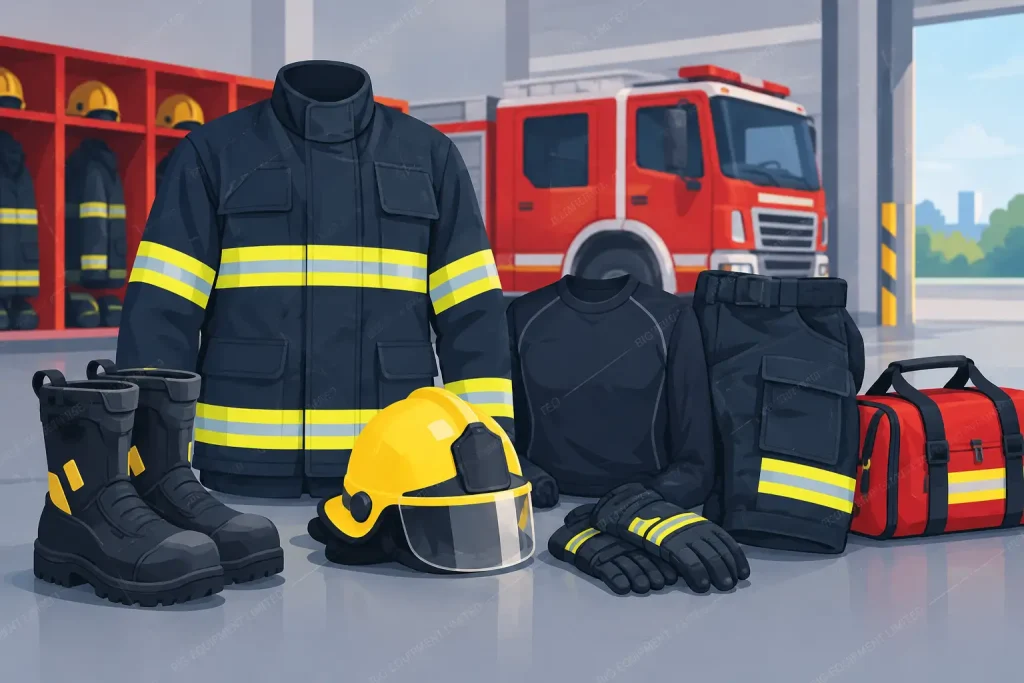
A firefighter may spend far more time in stationwear than in structural firefighting PPE. That makes essential firefighter stationwear items more than a uniform issue. They influence comfort through a 12-hour shift, freedom of movement during drills, professional presentation in public, and how quickly a wearer can respond when a call comes in.
Stationwear sits between operational readiness and everyday durability. It must work during appliance checks, community engagement, training, cleaning, driving and rest periods, while remaining suitable for an immediate change into task-specific protective equipment. The right specification is not about creating a corporate look. It is about issuing dependable layers that support the job without adding discomfort, restriction or unnecessary replacement costs.
Why firefighter stationwear needs an operational specification
Stationwear is not structural PPE and should never be treated as a substitute for it. Its requirements are different, but no less practical. A station garment needs to retain its shape after repeated laundering, manage heat during physical activity, allow movement at the shoulder and knee, and present a consistent standard across the watch.
The environment also matters. A wholetime crew based in a warm appliance bay may need lightweight, breathable layers for much of the year. A retained firefighter travelling from home, or a team working in exposed rural locations, may need adaptable layers that cope with cold starts, rain and changing activity levels. Wildland and rescue teams may also require garment systems selected around a specific risk assessment, climate and operational task.
For procurement teams, the strongest stationwear programmes balance consistency with choice. A standardised colour, branding position and core garment range support a professional identity. Multiple leg lengths, female-specific fits and a sensible size spread help ensure that uniform is worn as intended rather than tolerated until a replacement can be sourced.
Essential firefighter stationwear items to issue
Duty polo shirts and technical T-shirts
A durable polo shirt remains a practical stationwear staple. It provides a smart appearance for visits, briefings and public-facing work while being comfortable enough for everyday activity. Look for a stable collar, quality placket construction and fabric that holds colour and shape after regular industrial or domestic laundering, according to the service care process.
Technical T-shirts are equally useful, particularly for physical training, warm conditions and duties where a collar is unnecessary. Moisture management can improve comfort, but fabric selection should not be made on feel alone. Consider abrasion resistance, drying time, logo application method and whether the garment will be worn under other layers.
Where a flame-resistant layer is required, it should be selected against the actual risk assessment and relevant service policy. A garment described as flame resistant is not automatically appropriate for every exposure or compatible with every PPE system. Its protective properties, construction and care requirements all need checking.
Operational trousers
Station trousers do a demanding job. They need to allow climbing, kneeling, lifting and driving without binding at the seat, thigh or knee. A well-designed gusset, articulated knees and a waistband that remains secure during movement can make a material difference over a full shift.
Pocket layout should be purposeful. Useful storage for a notebook, gloves, torch or keys is valuable, but excessive external pockets can snag, collect debris or become uncomfortable beneath vehicle seating and specialist PPE. Reinforced high-wear areas can extend service life, although heavier reinforcement may reduce breathability. The correct balance depends on how the garment will be used.
Fit is a safety and retention issue, not a cosmetic one. Trousers that are too long can create a trip risk, while an overly loose waist can interfere with movement and belt-mounted equipment. Offering a proper range of waist sizes and leg lengths, alongside female fit options developed for operational movement, is a practical part of a reliable issue programme.
Mid-layers for changing temperatures
A station can move from cool appliance bay to heated office, then straight to an external incident. A breathable fleece, quarter-zip or lightweight insulated layer gives crews a way to manage temperature without needing to change their whole uniform.
The best mid-layer is usually the one that works under an outer jacket and does not impede shoulder movement. Bulky garments may feel warm when standing still but become restrictive in vehicle cabs or under protective clothing. Consider cuff design, zip placement, collar height and whether embroidery or identification can be added without compromising the garment’s performance.
Weather protection for non-fireground tasks
Waterproof and windproof outer layers are valuable for inspections, incidents, training days and prolonged periods outdoors. They are particularly relevant for firefighters supporting flood response, rural incidents, search activity or traffic management in poor weather.
A weather layer should be chosen for its intended use, not simply because it is waterproof. Breathability, hood adjustment, visibility, durability and compatibility with radios or other equipment all matter. For some roles, a lightweight shell is sufficient. For colder, exposed work, a layering system may provide better comfort and flexibility than a single heavy jacket.
Base layers and underwear
Base layers are often overlooked because they are not always visible on parade or in a uniform photograph. Yet they can have a significant effect on thermal comfort, moisture control and freedom of movement. A close-fitting, non-restrictive base layer is useful in cold conditions and can reduce the discomfort caused by sweat cooling against the skin.
Material choice should be based on climate, wearer preference and service requirements. Some personnel may prefer lightweight synthetic fabrics for rapid drying; others may need specialist fabric properties based on task and exposure. Fit matters here too. Base layers that bunch at the waist, sleeves or knee can become a persistent distraction during a shift.
Footwear, belts and everyday accessories
Footwear used around station, training and support duties must provide stable grip, support and durability. It should also suit the task. A lighter duty boot may be appropriate for routine station work, while more protective footwear may be required for specific deployment or outdoor duties. One style rarely suits every role.
Belts, caps, beanies and gloves can appear minor within an issue schedule, but they affect day-to-day readiness. A belt should remain secure without becoming uncomfortable when seated or wearing equipment. Cold-weather headwear and gloves should be easy to stow, replace and identify. These are low-cost items compared with major PPE, but poor-quality accessories are regularly noticed because they are used so often.
Build the system, not a pile of garments
The most effective stationwear issue works as a system. Each item should layer comfortably with the next, accommodate service identification, and have a clear role in the working week. A polo that rides up beneath a fleece, or a jacket that cannot be worn comfortably over a mid-layer, creates avoidable frustration and encourages crews to improvise.
Before committing to a wider rollout, trial garments with a representative group of wearers. Include different body shapes, roles, shift patterns and operational environments. Ask practical questions: does the trouser remain comfortable after driving for an hour? Does the shirt retain its appearance after repeated washes? Can the wearer move freely when lifting equipment? Does the garment work with existing PPE and vehicle seating?
Trials should include laundering feedback, not just first impressions. A garment that looks excellent when issued may lose colour, shrink, twist or delaminate after repeated wash cycles. Clear care instructions and access to replacements, alterations and repairs help protect the organisation’s investment while keeping personnel correctly equipped.
Presentation supports public confidence
Firefighters are regularly visible in schools, homes, public spaces and at difficult incidents. Clean, correctly fitted stationwear communicates order and preparedness before a word is spoken. That does not mean sacrificing practicality for appearance. The strongest uniform programmes achieve both through durable fabrics, accurate sizing and consistent application of badges, embroidery or printed identification.
For services with specialist teams, controlled customisation is often more useful than a completely separate uniform range. Team identifiers, role markings and tailored garment specifications can distinguish functions while retaining a recognisable service standard. British-based design and manufacture can also make it easier to refine fit, branding and technical details when a standard off-the-shelf garment does not meet the operational brief.
A good stationwear decision is made long before a garment reaches a locker. Specify for the real shift, test it with the people who wear it, and make replacement straightforward. When the call comes, crews should not be thinking about their clothing at all.