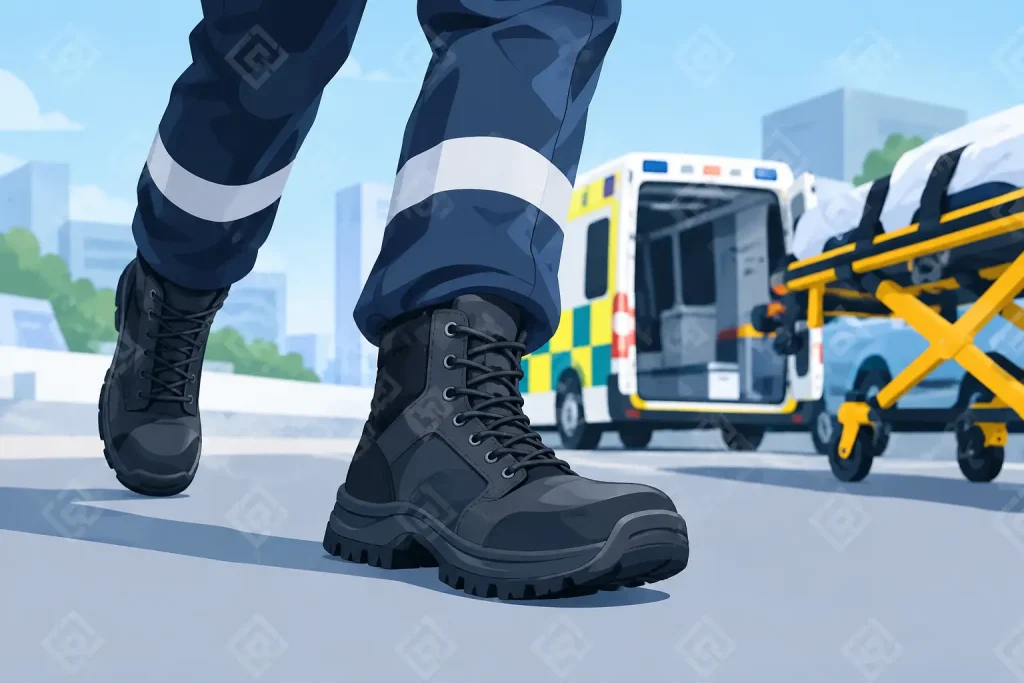
A crew can carry the right clinical kit, know the protocol and reach scene quickly, yet still lose capability through footwear that slips, pinches or fails in wet conditions. Paramedic footwear is working equipment, not an afterthought to a uniform. It must support rapid movement from vehicle to patient, maintain footing on contaminated or uneven ground, and remain tolerable through a full shift that may include long periods standing, driving and kneeling.
The correct specification depends on the role, operating environment and local policy. A road ambulance clinician, HEMS crew member and search and rescue responder may all need protection, but their priorities are not identical. Selecting well starts with the job the boot must do, rather than a generic idea of what a tactical-looking boot should be.
What Paramedic Footwear Must Deliver
At a minimum, operational footwear needs dependable grip, appropriate protection, stable support and a fit that does not distract from patient care. Those requirements sound straightforward. In practice, they must work together in rain, cold, heat, vehicle cabins, hospital corridors, roadside verges and domestic properties.
Grip is usually the first issue crews notice when it is missing. Wet paving, diesel residue, leaf-covered paths, stairwells and loose ground all ask different things of an outsole. A deep, widely spaced tread can shed mud effectively, while a sole designed for hard, wet surfaces may provide more predictable contact on smooth flooring. Neither approach is automatically right for every service. Consider the surfaces your team encounters most often, then assess whether the outsole compound and tread pattern are suited to them.
Protection must also be proportionate. A protective toe can be valuable around vehicle equipment, stretchers, loading areas and flight operations. However, added protection can increase weight and affect flexibility. Midsole puncture resistance may be appropriate where sharps, broken glass or debris are credible hazards, but it should be selected as part of a proper risk assessment, not simply because more protection appears better on paper.
Support matters over cumulative hours. Repeatedly stepping down from vehicles, carrying equipment and moving quickly over irregular terrain places demand on the foot, ankle, knee and lower back. A well-structured heel, stable platform and secure lacing system help manage that demand. Excessively stiff footwear, however, can make kneeling, driving and climbing stairs more tiring. The best balance is role-specific.
Fit Is a Safety Requirement, Not a Comfort Extra
Poor fit changes the way a responder moves. Heel lift increases the chance of blisters and instability. A cramped toe box can cause pain on descents or during prolonged standing. A boot that is too wide may feel comfortable in a fitting room but allow the foot to slide when carrying a monitor, response bag or patient equipment.
Fit testing should happen with the socks normally worn on duty and, where possible, later in the day when feet have expanded slightly. The heel should remain held during walking and stair movement, while the forefoot needs enough room for natural toe spread. There should be no pressure point across the instep, ankle collar or little toe.
Female fit deserves particular attention. Scaling down a traditionally male last does not always create a secure or comfortable fit for female responders. Differences in heel shape, forefoot width and volume can affect retention and stability. Teams issuing footwear should offer a meaningful range of widths and shapes, alongside professional measurement support, rather than expecting every wearer to adapt to a limited unisex option.
Break-in time is another operational consideration. New boots should be introduced before a demanding roster where possible. A gradual wear-in period allows the upper, footbed and lacing tension to settle without turning a long shift into an avoidable injury risk. If footwear produces persistent numbness, rubbing or pressure after reasonable adjustment, it is unlikely to become suitable through endurance alone.
Lacing, zips and speed of use
Fast-entry systems can be useful when time is short, particularly for personnel moving between station readiness and callout. Yet speed should not come at the cost of ankle security or a consistently locked-in heel. Side zips are most effective when paired with conventional lacing that can be set to the wearer’s foot before use.
Laces also need to stay secure, remain manageable with gloves and avoid creating snag hazards. Check that the system can be tightened across the lower foot and ankle independently. One overall pull may be quick, but it gives less control where the wearer needs different tension zones.
Weather, Water and Temperature Change the Specification
Waterproof paramedic footwear is often the sensible choice for UK roadside work, outdoor incidents and prolonged exposure to rain. A waterproof membrane helps keep feet dry when crossing wet grass, working in poor weather or entering water-affected properties. It does not mean the boot is maintenance-free, nor does it guarantee comfort in every climate.
Waterproof construction can reduce breathability compared with a more open boot. In hot vehicles, summer operations or high-exertion search activity, heat and moisture inside the boot can become a problem. A climate-specific approach is more useful than a one-boot policy for every deployment. Some teams may need waterproof duty boots for routine response and a lighter, more breathable option for dry, warm or vehicle-dominant work, subject to their safety requirements.
Cold weather adds another consideration. Insulation may protect comfort during static exposure, but it can be excessive for crews moving repeatedly between heated vehicles, clinical settings and outdoor scenes. Warm socks and a suitably sized boot can sometimes offer more flexibility than permanently insulated footwear. The correct approach depends on shift pattern, location and the duration of outdoor work.
After exposure to salt water, mud, bodily fluids or decontamination products, footwear needs attention. Remove surface contamination in line with service procedures, clean the upper using suitable products, and allow boots to dry naturally away from direct high heat. Drying a wet boot against a radiator or heater can damage adhesives, membranes and leather over time. Regular cleaning also makes cracks, sole separation and damaged eyelets easier to spot early.
How Procurement Teams Should Test Paramedic Footwear
A catalogue specification is only the starting point. Before committing to a wider issue, trial footwear with the people who will use it across representative duties. Include different foot shapes, shift patterns and operational settings. Feedback from a clinician who mainly works urban ambulance response may be different from feedback from air ambulance, rescue or event medical staff, and both can be valid.
Assess the trial in real tasks: vehicle driving, stair climbs, stretcher handling, kneeling, short sprints, extended standing and movement on wet ground. Ask users about pressure points after several hours, not just first impressions. Inspect the outsole for premature wear and the upper for damage around flex points.
A useful issue review should cover four areas:
- Fit range, including widths, female-fit options and compatibility with duty socks.
- Traction and stability on the surfaces crews actually encounter.
- Protection requirements identified through the organisation’s risk assessment.
- Replacement, repair and sizing support when an individual pair reaches end of service.
This process helps avoid a common procurement failure: choosing a boot that performs well in a short indoor trial but creates discomfort, fatigue or poor grip after months of operational use. It also produces clearer issue guidance, so personnel understand which footwear is intended for routine ambulance work, technical rescue, flight operations or severe-weather deployment.
When Should Footwear Be Replaced?
Replacement should be based on condition and performance, not appearance alone. Outsole lugs that have worn smooth reduce grip. Splits in the upper can compromise water resistance and support. Broken hooks, damaged laces, compressed footbeds and sole separation all affect safe use.
Encourage crews to inspect footwear during routine kit checks. Small repairs or replacement laces may extend service life where the boot remains structurally sound, while more significant failure should trigger replacement. A worn boot is not simply an inconvenience when a responder is carrying equipment on wet steps or working beside live traffic.
For individual clinicians and issuing managers alike, the question is not whether a boot looks suitably operational. It is whether it allows the wearer to move confidently, remain protected and keep attention where it belongs: on the patient, the team and the task ahead.