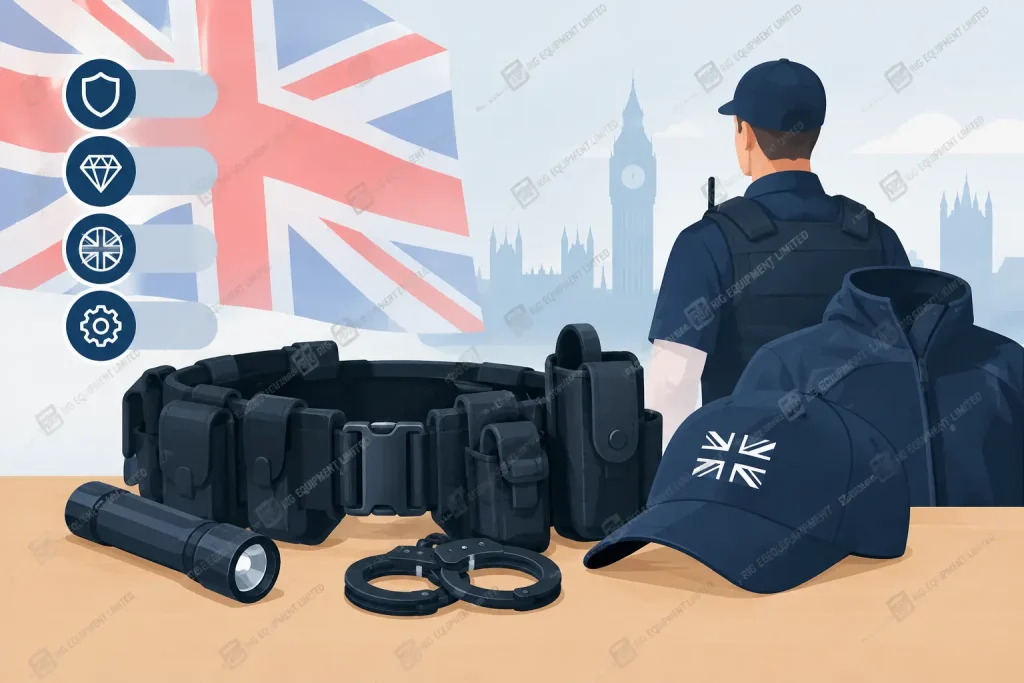
A duty kit failure rarely starts with one dramatic fault. More often, it begins with a glove that compromises dexterity, a jacket that traps heat during exertion, a belt that shifts under load, or an ill-fitting trouser that restricts a climb, casualty carry or vehicle exit. The best British made duty kit is therefore not a collection of individually impressive items. It is a properly specified system that protects the wearer, supports their role and continues to perform through repeated operational use.
For emergency services, defence and specialist response teams, the decision carries more weight than appearance. Equipment must allow people to work safely in poor weather, low light, confined spaces and high-pressure incidents, while maintaining a professional, consistent presentation. British design and manufacture can add real value here, but only when it is paired with appropriate materials, controlled production, reliable sizing and a supplier that understands the work.
What the best British made duty kit must do
The right kit starts with the task, not a catalogue category. A search and rescue team operating on exposed ground has different priorities from a flight crew, public order officer or medical responder. Some need flame-resistant protection and weather defence. Others need low bulk, quick access to medical equipment and movement through aircraft or vehicles. Many require both weather protection and a smart, recognisable uniform profile.
A good specification should define the operational environment, likely hazards, activity level, shift duration and equipment carried. It should also account for the moments that test clothing hardest: kneeling beside a patient, working overhead, handling wet lines, moving over rough terrain, wearing a harness or sitting for extended periods in a vehicle.
British-made kit is not automatically the best choice simply because of where it is produced. The meaningful advantage is closer control over design, materials, build quality, alterations, repairs and replenishment. For organisations, that can mean a clearer route from frontline feedback to an improved garment or accessory, rather than accepting a one-size-fits-all product intended for general workwear.
Build a duty system, not a shopping list
The most effective issue programmes consider how each component works with the next. A technically capable outer layer can still become a poor choice if it conflicts with body armour, catches on a radio harness or leaves no room for the insulation layer needed in winter.
Start at the skin
Base layers manage the first stage of comfort: moisture next to the body. In cold, wet or wind-exposed work, damp fabric can quickly reduce warmth and concentration. In high-exertion roles, poor moisture management may cause overheating followed by rapid cooling during rest, transport or casualty care.
The correct fabric depends on the role. A flame-resistant base layer may be necessary where thermal hazards are identified, while lightweight, fast-drying materials may better serve teams working hard in variable temperatures. The key is to avoid treating a base layer as an optional extra. It affects how every layer above it performs.
Choose outerwear for the real conditions
Stormwear should be assessed in relation to wind, rain, temperature, physical effort and the equipment worn over or beneath it. A highly protective shell may be appropriate for static exposure, but could be too warm for prolonged hill movement or a fast-paced medical response. Venting, hood adjustment, cuff design, pocket access and compatibility with helmets or flotation equipment can matter as much as the headline weather rating.
For flight operations, coast guard work and search and rescue, visibility requirements and water exposure must be considered alongside weather protection. In wildland or fire-related environments, material selection should reflect the identified heat and flame risks. Protection needs to be relevant, certified where required and supported by clear care guidance, because incorrect laundering or repair can compromise performance.
Carry equipment without creating new problems
Belts, bags, pouches, lighting and gloves are often selected separately, then expected to work together on issue day. That approach creates avoidable friction. A loaded belt can affect trouser comfort and lower-back movement. A bag can block access to jacket pockets. Gloves can make a radio control, zip pull or medical fastening difficult to use.
Test the complete carry arrangement while standing, kneeling, sitting, climbing and entering vehicles. Check access with both hands, including when wearing gloves. The aim is not to carry every possible item, but to position essential equipment consistently and securely so that it is available under stress.
Fit is a safety and performance requirement
Fit is frequently reduced to a sizing chart, yet operational fit is about range of movement, layering allowance and secure positioning under load. A garment that feels acceptable while standing in a fitting room may fail when the wearer reaches overhead, bends over a stretcher or wears a helmet, harness and radio.
Female fit apparel deserves the same technical attention as any protective feature. Offering smaller versions of a standard male pattern does not necessarily provide the right shoulder shape, waist placement, hip allowance or sleeve proportion. Better fit improves mobility, reduces snagging and discomfort, and helps ensure protective layers remain where they are meant to be.
Measurement guidance is particularly valuable for team issue, where inconsistent sizing can lead to unnecessary returns and delays. Where a standard size does not accommodate the wearer or role, alterations and bespoke development may be the practical answer. That is especially relevant for specialist teams with mixed body shapes, non-standard layering requirements or equipment interfaces.
Specify materials and standards with purpose
Terms such as waterproof, flame-resistant and high-visibility should never be treated as broad promises. Procurement teams should identify the required performance level, confirm which standards apply to the intended use and request clear product documentation. A standard may be essential for one role and irrelevant for another; selecting it without understanding the operational risk can add bulk, heat or cost without improving safety.
Material choice also affects service life. Abrasion zones, reinforced knees, zip quality, seam construction and fastening design all influence how a garment copes with repeated use. For accessories, consider exposure to salt water, mud, fuel, cleaning products, ultraviolet light and extreme temperatures. A technically suitable fabric can still disappoint if the construction does not match its working environment.
Care instructions deserve equal attention. Flame-resistant properties, waterproof treatments and reflective elements may all require specific washing, drying and repair practices. If the organisation cannot realistically maintain the item in line with its instructions, the specification should be reconsidered before purchase.
Specifying British-made duty kit for teams
For individual users, a rapid replacement may be the priority. For procurement leaders, consistency across a team is usually more difficult. The issue programme must accommodate new starters, seasonal changes, repairs, role transfers and the need to replace damaged items without creating mismatched colours, badges or garment versions.
This is where British-based manufacture can offer a practical operational benefit. Direct access to product knowledge, professional measurement support, embroidery, printing, woven badges, repairs and alterations can reduce the gap between what the team needs and what is actually issued. It also makes it easier to build a controlled specification rather than repeatedly sourcing disconnected items.
Before committing to a wider issue, trial representative sizes and roles. Include wearers who work in different climates, have different equipment loads and perform different tasks. Ask them to assess heat management, reach, visibility, pocket access, durability, laundering and compatibility with protective equipment. Frontline feedback should be recorded against agreed criteria, not collected as vague preference, so that decisions remain defensible and useful.
A sensible programme also plans for lifecycle support. Repairs can extend the useful life of serviceable garments, while a reliable route to replacements protects team presentation and readiness. No-minimum-order flexibility can be especially useful for small specialist units or for replacing one damaged item without waiting for a large batch requirement.
Make the final decision in operational conditions
The strongest indicator of quality is not how the kit looks on a rail. It is how it performs after repeated wear in the conditions your people face. Conduct a practical wear trial where possible, including the footwear, gloves, headwear, radios, harnesses and bags the wearer will actually use. Check the kit at the end of the shift as well as the beginning, when fatigue and moisture expose weak points.
At Rig Equipment, the focus is on building issue solutions around demanding roles rather than treating operational clothing as ordinary workwear. The right choice may be a proven standard garment, a carefully adjusted fit or a bespoke development for a specific hazard and operating environment.
Choose kit that gives the wearer fewer things to manage when the incident becomes difficult. That is the point at which dependable design, accurate fit and properly considered protection earn their place.