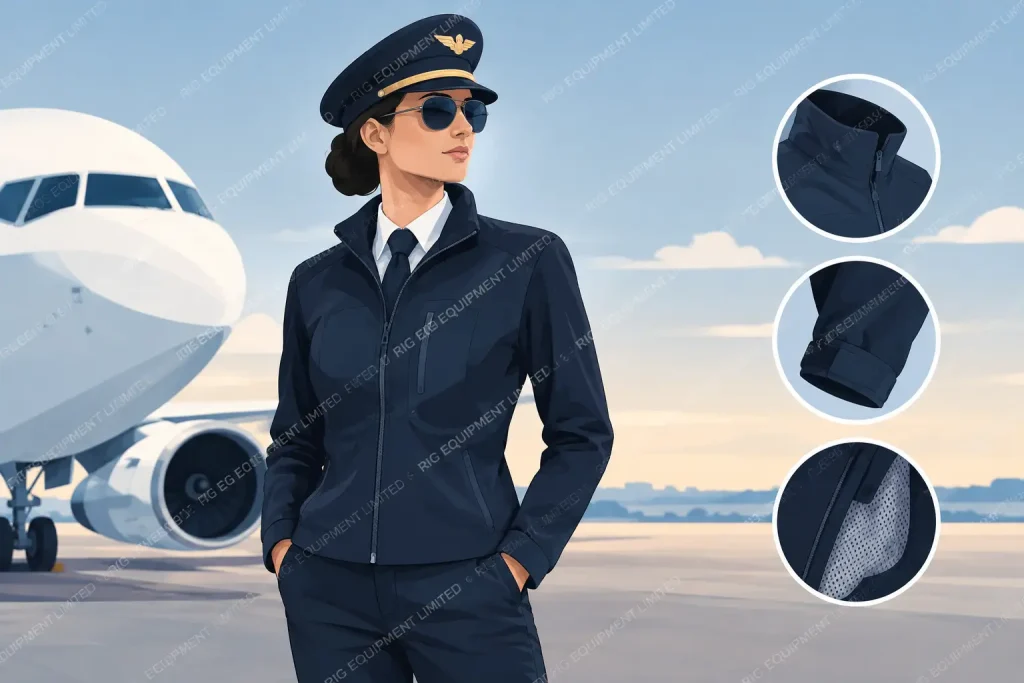
A flight crew cannot pause an urgent task because a cuff catches, a collar chafes under a harness or a garment traps heat in the cabin. Flight apparel must support the realities of aviation operations: restricted movement, fluctuating temperatures, noise, weather exposure and the need to transition rapidly from aircraft to incident ground.
For HEMS, air ambulance, search and rescue, coast guard and other specialist flight teams, clothing is part of operational readiness. It must provide protection appropriate to the risk, maintain a professional and identifiable appearance, and allow each wearer to work without distraction through a long shift.
What Flight Apparel Must Do
Flight operations place demands on clothing that are easy to underestimate from the ground. A crew member may begin a shift in a cool briefing room, work in a warm aircraft cabin, step into driving rain at a landing site and kneel beside a casualty in mud or snow. The same garment system has to manage those changes without becoming bulky, restrictive or difficult to maintain.
Fit is central. Flight apparel needs sufficient reach through the shoulders for loading, checking equipment and handling aircraft doors, while allowing comfortable seated posture for prolonged periods. Excess fabric is not merely untidy. It can interfere with harnesses, snag on equipment and make it harder to work in confined spaces. Equally, a garment that is too close-fitting can restrict movement at exactly the point a crew member needs to act quickly.
Durability also matters, but it should not be confused with unnecessary weight. Reinforced areas, secure fastenings and abrasion-resistant fabrics have a clear place in operational clothing. However, a heavy garment that causes fatigue or reduces mobility may be the wrong answer for an aircrew role. The correct specification depends on the aircraft, climate, task profile and protective requirements of the service.
Building a Flight Apparel System, Not a Single Outfit
The most reliable approach is to specify flight clothing as a system. Each layer should have a clear job, and each should work with the next rather than creating pressure points or overheating the wearer.
Base layers: temperature control starts next to the skin
A good base layer manages moisture during periods of exertion and provides comfortable thermal regulation when activity drops. This is particularly valuable for teams moving repeatedly between aircraft cabins and exposed sites. The fabric should dry efficiently, retain its shape and sit smoothly under the main uniform without bunching at the waist, knees or under body armour.
For roles with a flame-risk requirement, the base layer must be selected as part of the wider protective system. A non-compliant layer beneath a protective outer garment can undermine the intended performance of the whole ensemble. Procurement teams should assess the complete clothing combination, not just the label on the outer layer.
Flight suits and operational uniforms: movement without compromise
A flight suit or two-piece operational uniform should give the wearer practical access to essential items while maintaining a clean, functional profile. Pocket placement needs particular scrutiny. Pockets that are useful while standing may be inaccessible when seated in an aircraft, while overfilled thigh pockets can become uncomfortable against a harness.
Look for articulation in the areas that work hardest: shoulders, elbows, seat and knees. Adjustable cuffs, waist arrangements and secure closures help accommodate different body shapes and changing layer combinations. The best design is not the one with the most features. It is the one whose features remain usable in gloves, low light and poor weather.
Outer layers: protection when the aircraft doors open
Outer layers need to be matched to local weather and operational exposure. A windproof, waterproof and breathable shell can protect crews during landing-site work, maritime operations and prolonged tasks in poor conditions. Yet it must also fit over the uniform without restricting access to radios, medical equipment or harness attachment points.
For colder environments, insulation should be considered carefully. High insulation may be appropriate for static exposure, but can become uncomfortable during active casualty care or aircraft loading. Layering usually gives greater flexibility than relying on one heavily insulated jacket, especially for teams operating across seasons and locations.
Gloves, headwear and footwear: the details that affect performance
Peripheral equipment often determines whether a clothing system works in practice. Gloves must provide dexterity for equipment checks and patient care as well as grip and suitable protection. Footwear must support stable movement over wet grass, loose ground, helideck surfaces and uneven terrain, while remaining manageable within the aircraft.
Headwear, eyewear and weather protection should integrate with helmets, communications equipment and hearing protection. A seemingly minor incompatibility can become a persistent operational problem. Trialling the full ensemble together is more useful than approving individual items in isolation.
Fit for Every Crew Member
A one-shape approach to uniforms creates avoidable issues. Women working in flight and response roles should have access to female-fit apparel designed around their proportions, rather than being expected to size down from a male pattern. Correct fit improves range of movement, comfort and professional confidence. It also reduces the likelihood of loose fabric, poorly positioned knees or waistbands that shift during active work.
This does not mean every garment must be highly tailored. Operational clothing still needs room for movement and layering. It means the underlying cut, grading and adjustment options should reflect the people who wear it. Measurement guidance, sample fittings and alterations can make a meaningful difference when issuing garments across a mixed team.
Fit assessments should be completed in realistic working positions. Ask personnel to sit in aircraft seating, reach overhead, kneel, climb, wear a harness and operate key equipment. A uniform that looks correct during a standing fitting may reveal limitations as soon as the task changes.
Specifying Protection for the Actual Risk
Protective requirements should always follow a documented assessment of operational hazards. Flight crews may require flame-resistant materials, high-visibility elements, weather protection, anti-static properties or enhanced abrasion resistance. The right combination is determined by the role, aircraft environment, exposure duration and likely tasks after landing.
More protection is not automatically better if it compromises heat management, dexterity or mobility. A heavily protective garment that is rarely worn because it is uncomfortable does not improve readiness. Conversely, a lightweight uniform may be unsuitable where there is a credible thermal or flame hazard. The aim is proportionate protection that crews can wear correctly throughout their shift.
When reviewing materials, verify the relevant certification and understand what it applies to. A fabric certification is not always the same as a certification for the finished garment, and garment performance can change when repairs, badges, printing or alterations are added. Any customisation should be compatible with the specified protection and applied with the same care as the original construction.
Procurement Considerations That Prevent Problems Later
Uniform procurement is most effective when end users, safety leads and suppliers are involved early. Crew feedback identifies issues that may not appear on a technical specification: a zip that is hard to use with gloves, a pocket obscured by a lifejacket, or a collar that conflicts with communications equipment.
Before committing to a wider issue, assess samples in representative conditions. Consider laundering, repairability, colour retention, badge application and the availability of replacement items. For specialist teams, continuity matters. A damaged garment should be repairable where appropriate, and new joiners should be able to obtain compatible kit without forcing the organisation into an unnecessary full reissue.
Bespoke development can be valuable where an off-the-shelf garment does not meet the task. It may involve adjusting pocket configuration, integrating identification, selecting climate-specific materials or refining the pattern for a particular operational role. British-based design and manufacture can support closer communication during this process, particularly where fittings, alterations and controlled specification changes are required.
Care, Inspection and Service Life
Flight clothing is protective equipment, not ordinary workwear. Follow the care instructions precisely, particularly for flame-resistant, waterproof or specialist barrier fabrics. Incorrect washing products, excessive heat and unsuitable alterations can reduce performance even when the garment still appears serviceable.
Routine inspection should cover zips, seams, hook-and-loop closures, reflective details, abrasion points and contamination. A garment exposed to fuel, bodily fluids, chemicals or severe weather may need specialist cleaning, inspection or replacement according to organisational procedure. Recording repairs and replacements helps maintain a consistent issue standard across the team.
The most effective flight apparel is the kit that becomes dependable through repeated use: correctly fitted, appropriate to the climate and hazard, compatible with the aircraft environment, and maintained to the same disciplined standard as every other item a crew relies upon.