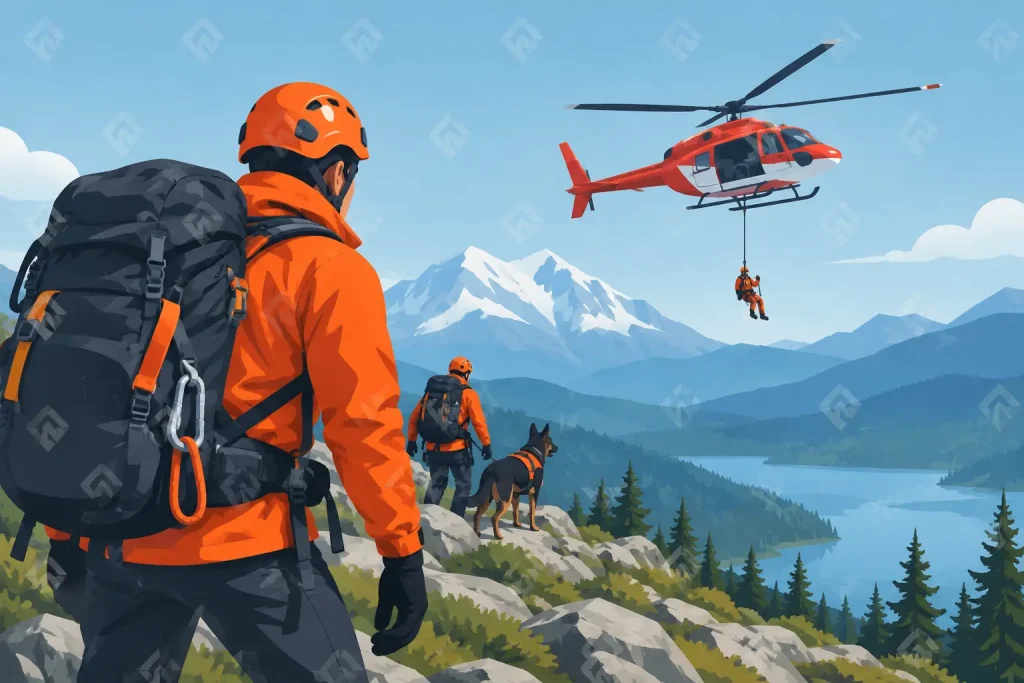
A casualty on an exposed hillside does not wait for a better forecast, a replacement glove or a radio that can be reached through the wrong outer layer. Search rescue outfitting is not a matter of building a uniform around appearance. It is the disciplined process of selecting clothing and equipment that protects people, preserves movement and keeps essential tools accessible when conditions deteriorate.
For SAR teams, coastguard personnel, HEMS crews and medical responders, the right specification must work across walking, lifting, kneeling, winching, casualty care and prolonged static periods. It must also stand up to repeated washing, vehicle use, salt exposure, rain, cold and the unavoidable abrasion of operational work. The best outcome is not simply a well-equipped individual. It is a team that can deploy with confidence, whatever the task demands.
Start Search Rescue Outfitting With the Operational Reality
A product specification should begin with where and how the team works, rather than a catalogue category. A mountain search team, a coastal rescue crew and an air ambulance clinician may all need weather protection, high visibility and reliable footwear, but their exposure, equipment carriage and movement patterns are different.
Consider the full operational cycle. Personnel may travel in a heated vehicle, stand on scene in driving rain, work hard enough to overheat during an extraction, then become cold while waiting for transport. Clothing needs to manage that variation without creating bulk, restricting reach or leaving the wearer dependent on constant layer changes.
The same principle applies to task-specific requirements. Flight crews need garments and accessories that work around harnesses, aircraft seating and flight equipment. Medical responders need practical pocket access and fabrics that tolerate regular cleaning. Coastal teams may need protection from wind-driven rain and saltwater exposure, while wildland personnel require considered flame-resistant options and materials appropriate to heat, smoke and rough terrain.
A clear operational brief prevents a common procurement error: selecting one garment to solve every condition. A single outer layer may be ideal for wet, static work but excessive during high-output movement. A layered system usually provides the better answer, provided each layer has a defined role.
Build a Layering System, Not a Collection of Garments
Effective search rescue outfitting manages temperature, moisture and weather exposure from the skin outward. Each component must work with the next, including cuffs, collars, pocket placement and the room needed to add insulation without compromising mobility.
Base layers manage the first problem
Base layers are often overlooked because they are less visible than jackets or helmets. Yet they are central to comfort over a long shift. A suitable technical base layer moves perspiration away from the skin and dries quickly, helping to reduce the chill that follows exertion. For teams working around heat sources or where flash-fire risk is relevant, flame-resistant materials may be a necessary part of the specification.
Fit matters here. A base layer that bunches under body armour, a flight suit or a harness will become a distraction long before the end of a deployment. Female-fit options are not a cosmetic alternative. They are a practical requirement where a better cut improves freedom of movement, thermal performance and comfort through long operational periods.
Mid-layers provide adjustable warmth
Mid-layers should retain warmth without adding unnecessary weight or restricting arm movement. Their value is in adaptability. A responder can add insulation during a prolonged search sector or casualty handover, then remove it before a demanding carry.
The trade-off is durability and packability. A heavier insulated garment can be excellent in cold, static conditions but may take too much space in a response bag or become unsuitable during intense activity. Teams should test insulation alongside their outerwear and duty equipment, not in isolation.
Outer layers protect the working system
Stormwear must deal with rain, wind and abrasion while allowing heat and moisture to escape. Waterproof performance alone is not enough. A jacket that keeps rain out but traps perspiration can leave the wearer cold once activity drops.
Look closely at the working details: hood adjustment around headwear or helmets, reinforced areas, cuff closures that work with gloves, ventilation options, two-way zip access and pockets that remain usable when wearing a harness or rucksack. High-visibility panels and reflective elements also need to be positioned for real-world visibility, not simply to satisfy a visual expectation on a hanger.
Protect the Interfaces Where Work Happens
Hands, feet, head and eyes encounter the environment directly. These items should be specified as operational interfaces, not added at the end of the buying process.
Footwear needs to support the terrain and the duration of the task. Grip, ankle support, water resistance, toe protection and insulation all have a place, but no one boot is best for every deployment. A waterproof boot may be right for persistent wet ground, while a more breathable option may reduce fatigue in warmer, fast-moving work. Fit trials should include walking, crouching, climbing steps and operating vehicle pedals.
Gloves deserve the same scrutiny. Warmth, dexterity, cut resistance, flame resistance and wet grip can pull a design in different directions. Teams often need more than one glove option: a protective outer glove for exposure and handling, with a lighter task glove for equipment checks, medical work or detailed tasks. Gloves should be tested with radios, zips, buckles and touch-sensitive devices where relevant.
Helmets, eyewear and lighting must operate together. Check that helmet retention is secure, eyewear does not interfere with seals or communications, and head torches can be fitted without compromising stability. Lighting should support hands-free work but must not create snag hazards around aircraft, vegetation or confined spaces.
Make Carry Systems Serve the Task
The wrong bag can waste time and increase physical strain. The right one keeps critical items protected, organised and quickly available without upsetting balance on uneven ground.
Before selecting bags, belts or pouches, identify what must be immediately accessible and what can remain stowed. Radios, medical gloves, casualty markers, navigation tools and lighting may need different positions depending on whether the wearer is walking, seated in a vehicle, operating near water or attached to a harness.
A useful field assessment should include these five checks:
- Can the wearer reach essential equipment with either hand?
- Do pockets and bags remain accessible under a rucksack or harness?
- Does the load stay secure when crawling, climbing or bending?
- Can wet or contaminated items be separated from clean equipment?
- Is the system quiet, low-profile and free from avoidable snag points?
Organisation matters as much as capacity. An overfilled pack makes it harder to locate time-critical equipment, while too many externally mounted items increase the chance of loss or entanglement. Standardising layouts across a team can also support safer handovers, especially when another responder must find equipment quickly.
Test Fit, Compatibility and Maintenance Before Issue
Sizing charts are a starting point, not a final decision. Personnel should be measured professionally where possible, then allowed to assess garments while wearing the layers and equipment used in service. Reach overhead, kneel, sit in vehicles, wear a harness and handle tools. A jacket that feels comfortable when standing still may reveal limitations immediately under load.
Compatibility testing should include the complete issued system: helmet, hearing or communications equipment, eyewear, base layers, outerwear, gloves, belt kit, medical bags and footwear. This is where pocket conflict, restricted shoulder movement and inaccessible radio controls become visible.
Maintenance is part of readiness. Teams need clear processes for cleaning, inspection, repairs and timely replacement. Damaged stormwear, worn boot soles, compromised helmet components and failing reflective trim should be identified before they become operational problems. Bespoke measurement support, repairs, alterations, embroidery and identification details can help organisations maintain consistency without forcing personnel into unsuitable standard sizes.
For procurement leads, it is worth considering the whole service life rather than the initial issue alone. Availability of replacements, no-minimum-order support for individual needs and the ability to reproduce an agreed specification all reduce disruption over time. British design and manufacture can also be valuable where direct technical discussion, controlled development and responsive alterations are required. Rig Equipment approaches this work as a partnership in operational readiness, not a fashion exercise.
Specify for the Team You Have
A consistent professional appearance has value, but standardisation should not mean ignoring individual fit, climate exposure or role-specific demands. The best issued system has enough commonality to support recognition, training and replenishment, while allowing sensible variations for female fit, specialist medical roles, flight operations and differing environments.
Ask personnel what fails first, what they avoid wearing and what slows them down. Their experience will not replace formal standards or risk assessment, but it will reveal the small details that determine whether equipment is used correctly in poor weather at the end of a long shift.
The purpose of every layer, boot, glove and bag is simple: remove avoidable barriers between a trained responder and the person who needs help. When outfitting is specified with that standard in mind, readiness becomes something teams can wear, carry and rely on.